Twin Cities Lawn Fertilization
& Weed Control Services
Industry-Leading Lawn Fertilizer and Weed Control Programs that Cultivate Thick, Healthy and Beautiful Lawns. Serving clients in the Greater Twin Cities Metro Area of Minneapolis and St. Paul.
Lawn Care Treatment Services Designed and Operated by MN Turfgrass Science Experts
We Cultivate Healthy & Beautiful Lawns
KG Landscape has over 23 years of experience applying lawn care treatments, perfecting application timing and continuously fine tuning our services to ensure our customers get the best possible value and results. We toil over every detail with a passion, so that our customers don't have to!
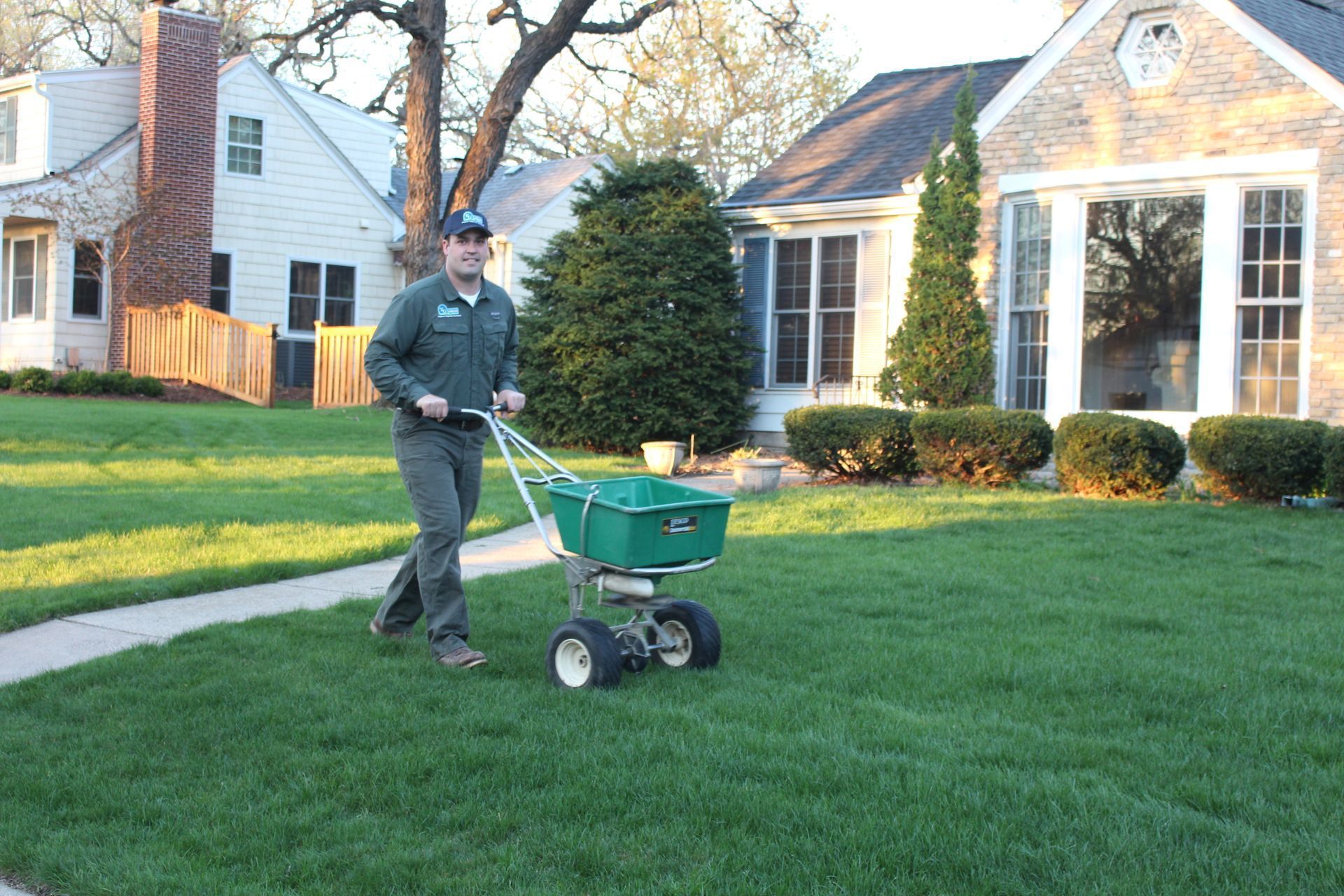
Specialized MN Lawn Care Experts, Since 2003
At KG Landscape, we are passionate about using our knowledge and experience to help people improve their lawns. It feels great to achieve a lawn that you're truly proud of and we want to help you get there!
Our owner, Kent Gliadon, earned his bachelor’s degree in Turfgrass Science and Landscape Design from the University of Minnesota, to learn everything he could about cultivating a healthy and beautiful lawn.
We are proud to provide our customers with services based on this educated approach to lawn care, that takes out the guess work and offers great results. Kent designs our lawn care service packages and hand selects the products we use, to ensure you get the best service possible.
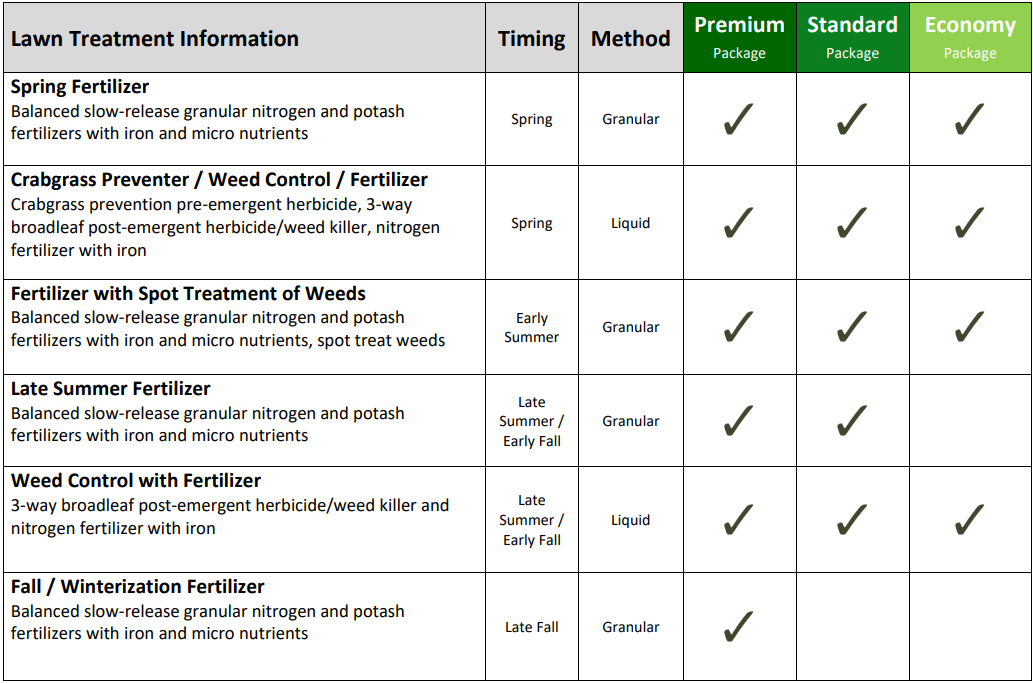
Our Fertilizer & Weed Control Packages
Premium Package - (6) Treatments
Our (6) Treatment Premium Package provides your lawn with the full recommended rate of Nitrogen and Potash fertilizer per year as well as (3) carefully timed weed control treatments throughout the growing season.
- Spring - crabgrass preventer and fertilizer
- Late Spring - broadleaf weed killer + crabgrass prevention booster
- Late Spring - fertilizer
- Summer - fertilizer
- Early Fall - broadleaf weed killer with fertilizer
- Late Fall - winterization fertilizer
Our proprietary blends of slow release fertilizer will feed your lawn with 3.0 lbs. of Nitrogen per 1,000 square feet. Our fertilizer treatments are spread out throughout the season for optimal results. Our blends also include other important fertilizers for your lawn; like potash, Iron and other micro nutrients. Treatments included in our Standard package:
Standard Package - (5) Treatments
Our (5) Treatment Standard Package - provides your lawn with the same great fertilizer and weed control products and services, as our premium package, but with a little less (one application less) fertilizer per season.
- Spring - crabgrass preventer and fertilizer
- Late Spring - broadleaf weed killer + crabgrass prevention booster
- Late Spring - fertilizer
- Summer - fertilizer
- Early Fall - broadleaf weed killer with fertilizer
Our custom slow-release fertilizer blends provide your lawn with 2.25 lbs. of nitrogen per 1,000 square feet. These fertilizer applications are timed throughout the season to ensure the best results. Our blends also contain other essential nutrients for your lawn, including potash, iron, and additional micronutrients. The Standard package also includes three (3) weed control treatments per season. Treatments included in our Standard package:
Economy Package
Our (4) Treatment Economy Package - is primarily meant to control lawn weeds, while providing some lawn fertilization and keeping costs to a minimum. This package includes 1.5 lbs. of Nitrogen per 1,000 sq ft and (3) types of weed control each season, including:
- Spring - crabgrass preventer and fertilizer
- Late Spring - broadleaf weed killer + crabgrass prevention booster
- Late Spring - fertilizer
- Early Fall - broadleaf weed killer with fertilizer
Organic Lawncare - Organic Lawn Fertilization Options
For homeowners looking for a more natural approach to lawn care, we offer an organic fertilizer program designed to support healthy turf while working in harmony with the environment. These treatments focus on improving soil health, encouraging steady growth, and reducing reliance on synthetic inputs.
Organic fertilization is a great choice for families, pets, and anyone interested in a lawn care plan that emphasizes long-term sustainability and natural balance. Learn more about how our organic lawn treatments work and whether they’re right for your property.
Visit our Organic Lawn Care service page for information on our Organic and Transitional Organic lawn treatment packages.
Creeping Charlie & Wild Violet Weed Control - Specialized Treatments
We have been helping customer's get rid of Creeping Charlie and Wild Violet weeds in their lawn, for over 15 years now.
These are by far the two hardest lawn weeds to kill. For more info, see our detailed article on How To Kill Creeping Charlie for everything there is to know on this topic.
The (3) most important factors when to comes to Killing creeping Charlie and wild violet lawn weeds are:
- Using the most effective specialty herbicide
- Only treating during the most effective time of year
- Making repeat applications, 10-14 days apart .
Our (2) Treatment Creeping Charlie Weed Control Package - Kills the Most Stubborn Weeds
Check out our in-depth blog about exactly how we do it and the best timing If your interested in learning more about how to kill creeping Charlie in your MN lawn,
Double Lawn Aeration & Overseeding Service
The Most Cost Effective Way to Fix up a Thin Lawn in MN
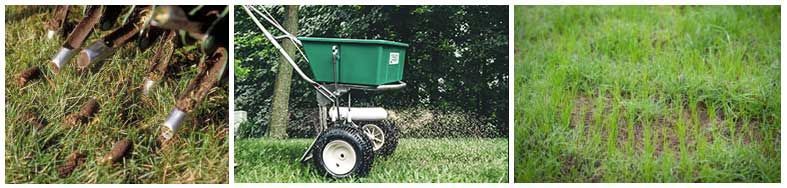
Our double pass aeration and overseeding service, will ensure you have the thickest and best-looking lawn possible.
1) We core aerate your lawn (2) times during the same visit.
This aerating creates many small holes in your lawn where new grass seed can grow, to fill in thin or damaged areas. Note: this is crucial, because grass seed that is only spread on top of a lawn without aerating first, is not likely grow.
2) Then, we over-seed your lawn with a blend of new sun & shade mix seed varieties .
With watering, this grass seed will wash into the holes created by the double pass core aerating and as the cores/soil plugs break down, the soil from those cores will wash into the aeration holes, perfectly covering the seed as intended.
We use the best new seed varieties, hand selected by our owner and Turf Specialist, Kent Gliadon.
You'll See a Huge Improvement in Your Lawn Within 4-6 Weeks
We recommend this every other year for typical lawns, or every year if you have a shaded or thin lawn, and/or a lawn that receives annual damage from dogs or from heavy foot traffic/wear and tear. Late August to Mid-September is the best time of the year to aerate and overseed in MN, but early spring also works great too.
In addition to everything mentioned above, core aeration reduces soil compaction and increases the water, oxygen and nutrients available to the grass roots. Regular lawn Aeration also is the best thing you can do to prevent thatch issues in your lawn. If you're interested in learning more, we have a very in depth article on Everything there is to Know About Managing Thatch in Your Lawn that's worth reading!

Fall Lawn Aeration Service - Relieves Soil Compaction
Lawn aeration prevents compaction from negatively impacting the health of your grass and has a huge impact when it comes to building and supporting deep, healthy root systems. Our lawns are prone to soil compaction issues that arise from normal usage, such as mowing, walking or doing other activities in our lawns.
How Often Should You Aerate Your Lawn?
One of the best ways to keep your lawn in great shape is to aerate every year. There’s reason that golf courses aerate every single year in MN, because it’s needed and it's great for your lawn.
Many of our customers alternate between our double aeration & overseeding service and a Fall aeration each year, which is an excellent plan to maintain the nicest lawn possible. If you are already doing a double pass aeration and over-seeding service this year, then adding an additional fall aeration service is not necessary.
When is the Best time to Aerate?
The best time of the season to aerate your lawn in Minneapolis and St. Paul is late August through early October. Spring is the second best time of year to aerate.
How to Care of Your Lawn After a Fertilizer or Weed control Treatment
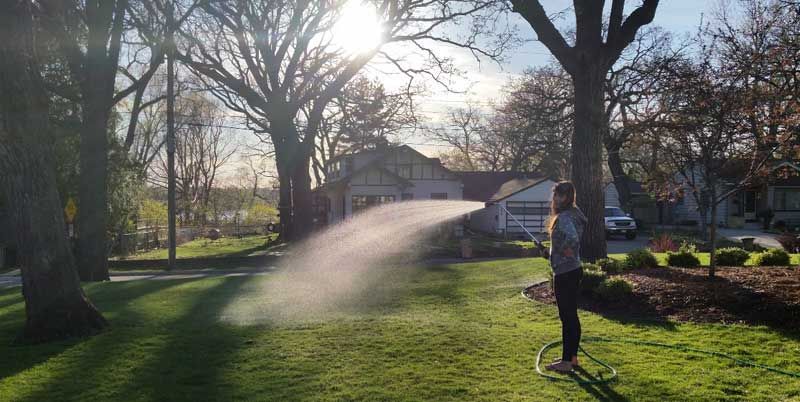
After we apply a fertilizer and/or weed control treatment don’t water your lawn for 24 hours. You will see a small sign in your lawn as well as paper work on your door that will tell you what we applied and how to care for your lawn after the treatment.
For best results, water 2-3 times per week for one to two weeks starting 48 hours after lawn treatments. Adding nutrients to your lawn speeds up the lawns metabolic processes. The grass will require more water to consume and put the nutrients to work growing thicker and greener. Regular watering will help prevent your lawn from drying out after an application and will make the applications more effective!
Essential Turf Grass Nutrients - What's In Our Fertilizers
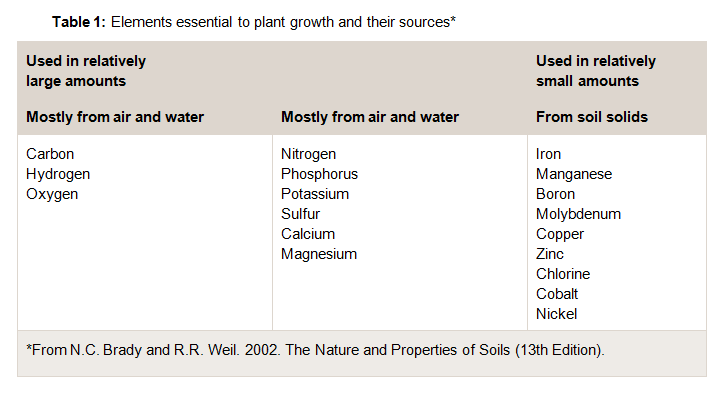
There are 18 essential elements used by the grass in your lawn. Each element is used by the grass for different functions, but all are needed in varying amounts for your lawn to properly grow and thrive. The good part for us is that most soils in MN contain adequate amounts of most of the 18 essential nutrients your lawn needs.
Nitrogen, Phosphorus and Potassium are considered macro-nutrients, because they are consumed by your grass in the largest quantities. Most Minnesota lawns already contain soil with adequate levels of Phosphorus for healthy lawns to thrive, so the core nutrient components of our treatment programs focus on the application of Nitrogen and Potassium .
These are the two primary macro-nutrients your lawn needs that can’t be found in adequate quantity in our native soils. Grass will grow without adding these nutrients, but if you love a healthy, lush and green lawn, then adding these nutrients is must!
Nitrogen - The Most Important Nutrient for Lawn
Nitrogen is the most important nutrient for your lawn. According to the University of Minnesota, high maintenance lawns where grass clippings are mulched (not bagged and removed) should be treated with 3.0 lbs. of actual Nitrogen per year for best results. For those of you considering doing this yourself, actual nitrogen means the real amount of nitrogen contained in the fertilizer by weigh, as opposed to the bulk weight of the fertilizer itself.
In accordance with the U of M’s recommendations and our experience in achieving best results, we apply 3.0 lbs. of Nitrogen per 1,000 square feet of lawn for our premium fertilizer package. This ensures that your lawn receives the highest recommended amount of Nitrogen per season. Each of our treatments contains 1/2-3/4 lb. nitrogen per application to ensure the lawn is being fed regularly throughout the season while reducing the risk of burning the lawn to virtually zero.
Spoon feeding the Nitrogen, as it’s called, also reduces the risk of Nutrient runoff and leaching (washing off the lawn or filtering too deep into the soil for the grass roots to reach). Leaching means more nutrients than the lawn can use are applied all at once allowing rain to wash away the extra material before it can be consumed by the grass.
We primarily use granular slow-release Nitrogen fertilizers to achieve consistent feeding throughout the growing season. For instance, slow release fertilizers are best used during the hot summer months when the lawn is using less Nitrogen between rains falls and periods of heat stress. However, we use a mixture of slow and quick release Nitrogen for winterization applications in the fall to make sure the lawn can quickly metabolize and store the Nitrogen before going dormant for winter.
We've found that Spoon feeding (applying lower amounts of nutrients more often) is the most reliable method to ensure proper timing of nutrient applications, even more so than using one of the several types of coated Urea products used for slow release Nitrogen. This is because the speed at which coated urea products release their nutrients, is based on how often they are wetted. So, if we received wet spring with several big rain storms in a row or if you run your irrigation system regularly, the Nitrogen fertilizer will release much faster than it would in dry conditions.
Forms of Nitrogen
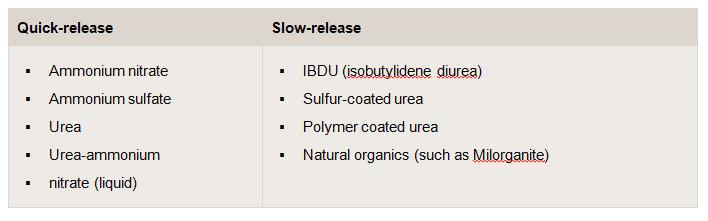
Our conventional lawn care treatments utilize nitrogen in the form of stabilized Urea to feed your lawn. Urea used for lawn fertilizer is an organic compound that is produced synthetically. For these reasons, Urea is considered a ‘synthetic organic’ compound.
Urea is naturally found in the urine of most living animals including our own, as it is the waste product of the body’s process of metabolizing proteins. The table below shows several forms of both quick and slow-release Nitrogen. Visit the link below for more information! http://www.extension.umn.edu/garden/yard-garden/lawns/fertilizing-lawns/
Is Fertilizer Safe To Use On My Lawn? Kid and Pet Safe Lawns
We use Urea Based Fertilizers - Urea is an Organic Compound
Our conventional Nitrogen fertilizer is Urea based. The Urea used for fertilizer is an Organic compound that is synthetically produced, which provides a readily available form of Nitrogen that helps grasses and other plants to grow. Is fertilizer safe for pets and kids?
- Yes, urea nitrogen is perfectly safe to use in lawns when used according to the product label.
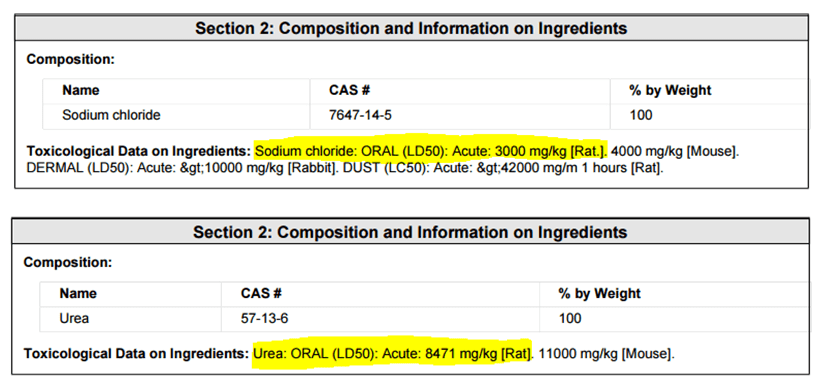
- Urea is almost 3 times less toxic than table salt (sodium chloride), when tested in lab studies.
What Do Dead Spots in a Lawn, Caused by Dog Pee, Have to Do With Lawn Fertilizer?
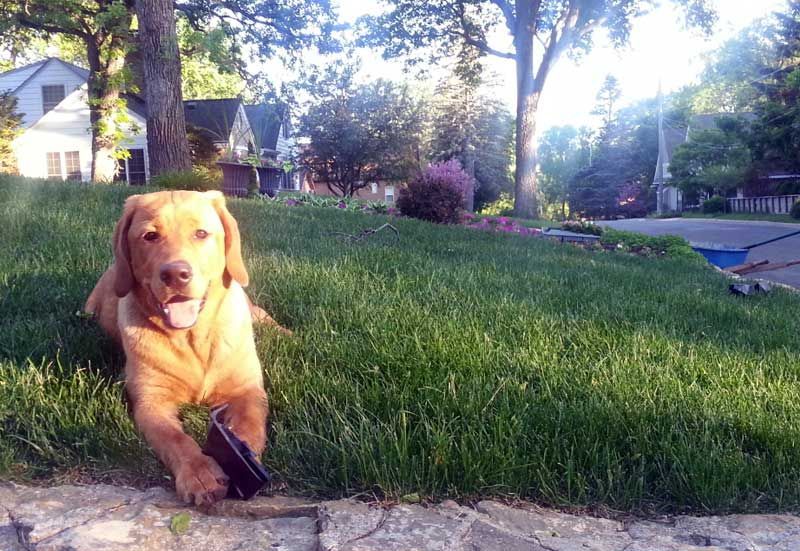
This may sound odd, but did you know that dog urine contains roughly 45% Urea? This is why dog urine can leave dead spots in your lawn, because the urea is so concentrated within a dogs urine, that it actually over fertilizes, killing a small circle of grass where the dogs pees.
This is also the reason that there is always a dark green circle of thick and healthy grass around the perimeter of the dead spot. The healthy green ring of grass left around the outside of a dog-spot, is created because the urea levels are at the maximum desired level of nitrogen for of grasses around the edges of the dog spot. As the urea dilutes around the edges of where a dog went potty in the lawn, it produces a ring of thick and healthy grass.
Homeowners with children or pets should have no reason to be concerned about using Urea on their lawns . The Urea used for fertilizer is a synthetic derived organic compound and it is the purest readily available form of plant usable nitrogen there is, which makes it the lowest cost product per lb. of actual Nitrogen on the market.
Comparing the toxicity reports on the MSDS Label’s for each. The MSDS (material safety data sheet) Labels shows the amount of material that would need to be ingested (eaten) by a rat to cause acute toxicity. As shown below in the composition and information on ingredients sections of both sodium chloride (table salt) and Urea, you can see that a rat can only eat 3000 mg/kg of salt before showing signs of acute toxicity, where as, it must eat almost 3 times as much Urea or 8471 mg/kg before showing acute toxicity.
Potassium
Potassium in Lawns - Important for Tolerating Heat Stress and Prepping for Winter
Potassium also commonly referred to as Potash, is an important lawn nutrient that helps regulate many different physiological processes inside the plant, including nitrogen usage.
From dealing with heat stress to storing energy before going dormant over winter, potassium helps your lawn deal with stress and changing weather conditions throughout the season.
We apply potassium throughout the season to make sure your lawn has what it needs to stay healthy and strong. Potassium is added to lawn treatments in smaller quantities than Nitrogen since potassium bonds more tightly to soil than Nitrogen and is used by the grass in smaller quantities.
Phosphorus
In general, our Minnesota soils contain enough phosphorus to support healthy turf, without the need to add more. Phosphorus is actually not allowed to be used in typically turf fertilization applications in MN. Fertilizers that contain phosphorus should only be applied to lawns for these 2 reasons:
- As part of a starter fertilizer , for use when establishing new lawns from seed or sod. Turf establishment, allows for use of phosphorus fertilizers. Phosphorus is beneficial for root growth and increases germination and the success rate for grass seedlings.
- Another time when phosphorus is used is when soil tests shown a phosphorus deficiency (lack of phosphorus) in the soil.
Interested in an Organic Fertilizer Option ?
Of course, here at KG Landscape, we do everything we can to limit the effect our fertilizer chemicals have on the surrounding environment. We spoon feed the fertilizer to the lawns and train our fertilizer technicians on the correct methods of application so there is little waste.
However, some of our clients are still opposed to using synthetic chemicals to fertilize their lawns. For those interested, we have created an organic fertilizer program . Visit that page to learn more about the creative and innovative techniques we have employed.
Effective Weed Control Services for Your Lawn
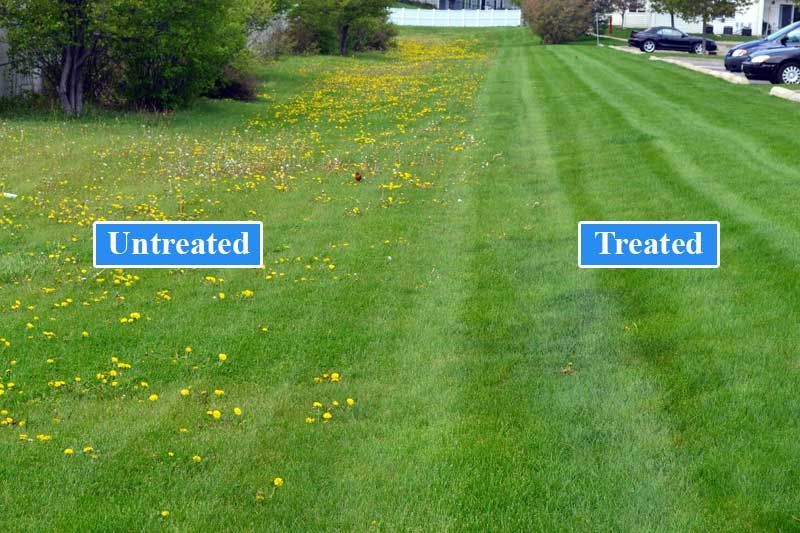
Contrary to popular believe and unfortunately, a well fertilized thick lawn will not create a weed free lawn on it's own, so it’s important to have your lawn treated with weed control to prevent weeds from taking over.
There are many weeds that will outcompete our cool season lawn grasses, so active steps are needed to prevent and get rid of those weeds to achieve a high-quality lawn. Weed control is an ongoing process in lawncare.
Spring Crab Grass Preventer Treatment
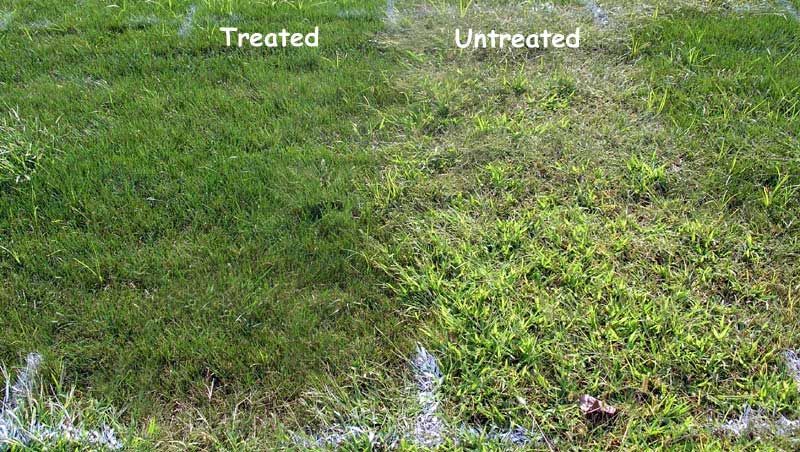
Crabgrass can be one of the most damaging weed problems you can have in your lawn. Crabgrass seeds are tiny, windblown, and will definitely find their way into even your fenced in backyard. Crabgrass will take over your lawn and out-compete the cool season grasses in sunny areas and creating even more bare spots.
The long and short of it, is that a pre-emergent crabgrass prevention treatment is essential each spring, to stop crabgrass seeds from germinating . Skipping even one year of pre-emergent will allow crabgrass to start growing in your lawn. All three of our fertilizer and weed control packages include a spring pre-emergent crabgrass preventer treatment because it’s very important to keep the crabgrass out!
If you're interested in learning more about preventing crabgrass in your lawn, check our our extremely informative article on Everything there is to Know about Preventing Crabgrass in MN Lawns
Broadleaf Weed Control Treaments
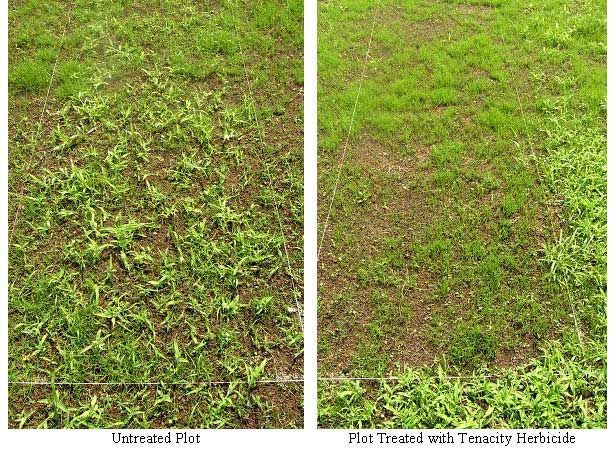
Lawn weeds like clovers, seedlings from your big maple tree in front, and the dandelion seeds that blow in from your neighbor’s lawn must be treated every year to maintain a weed free lawn. Broadleaf weeds grow in several cycles throughout the year.
Some weeds are perennial and will come back every year if not treated, one example of a perennial weed is creeping Charlie . Others, like crabgrass for instance, are summer annuals and grow from seed each year each spring, produce seeds in the summer and then die each fall. While still others like dandelions for example, are winter annuals that begin growing in the fall, survive over winter, and seed again before dying in the spring.
Your lawn is constantly exposed to new weeds hoping to get a foothold in your lawn. All of our conventional fertilizer packages treatment packages will treat for broadleaf weeds 2 times per season. Once in later spring in order to kill weeds that germinate after the spring weed seeds have dropped. Then again for a second time in the fall to kill weeds that have flown in and germinated over the hot summer months.
Click on this link to learn more about How to Kill Creeping Charlie