Applying Compost-Based Topdressing To Strengthen a Patchy Lawn
Some people like to use the phrase "nature is healing." However, in some cases, nature can't heal itself alone. That's where we come in. Recently, a homeowner in Maple Grove, Minnesota reached out to KG Landscape after struggling to revitalize a back yard that was simply failing to thrive. Despite what seemed like ample sunlight and water, the turf suffered from numerous thin and bare patches that refused to improve. To determine exactly why they couldn't get this yard to flourish on its own, our client asked us to assess the yard and determine a plan that could reinstate the lush green lawn they expected for their Maple Grove home.
Discovering What Went Wrong with This Maple Grove Yard
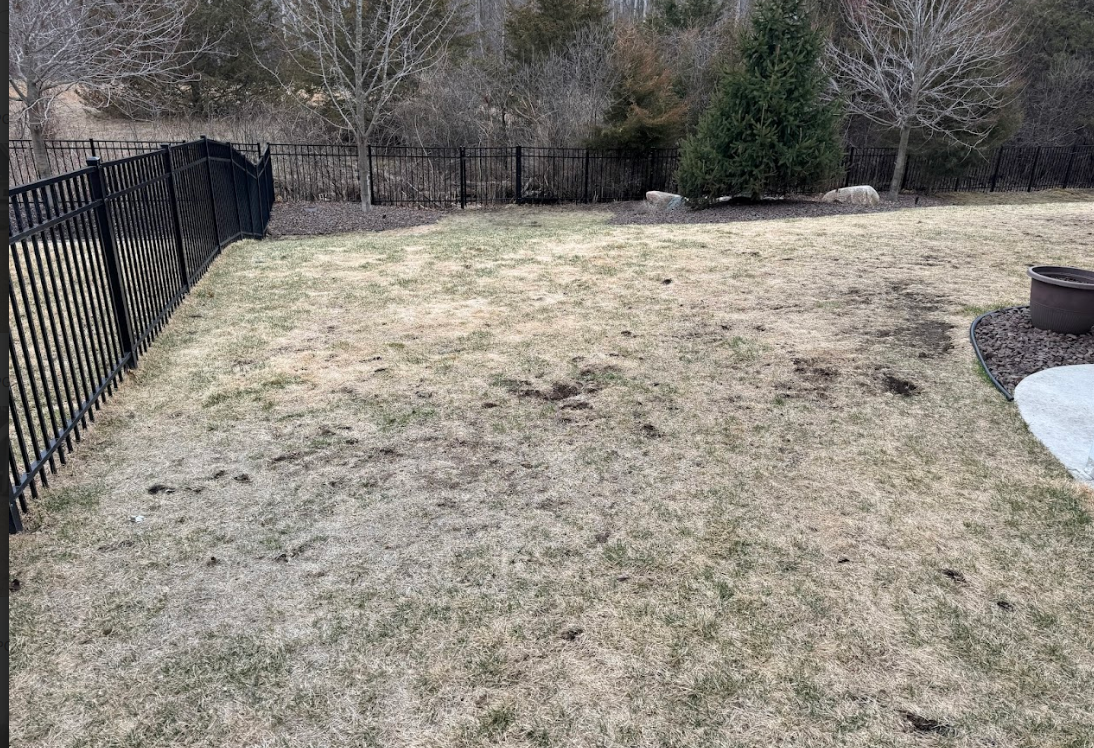
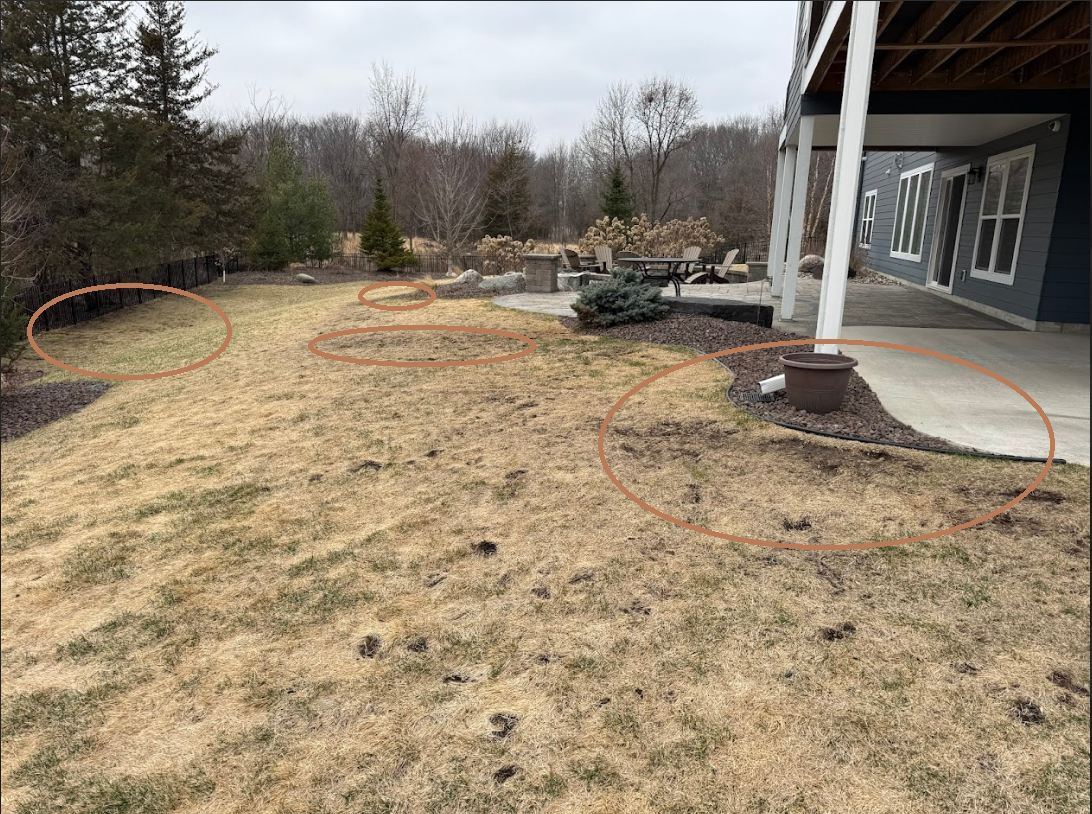
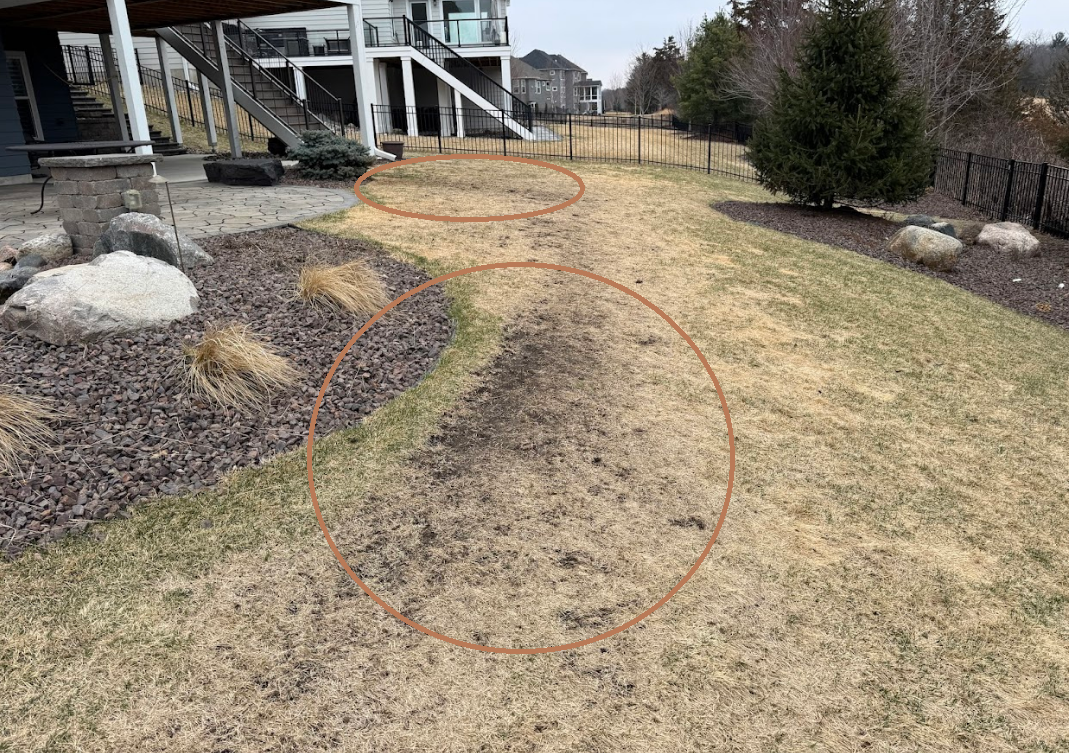
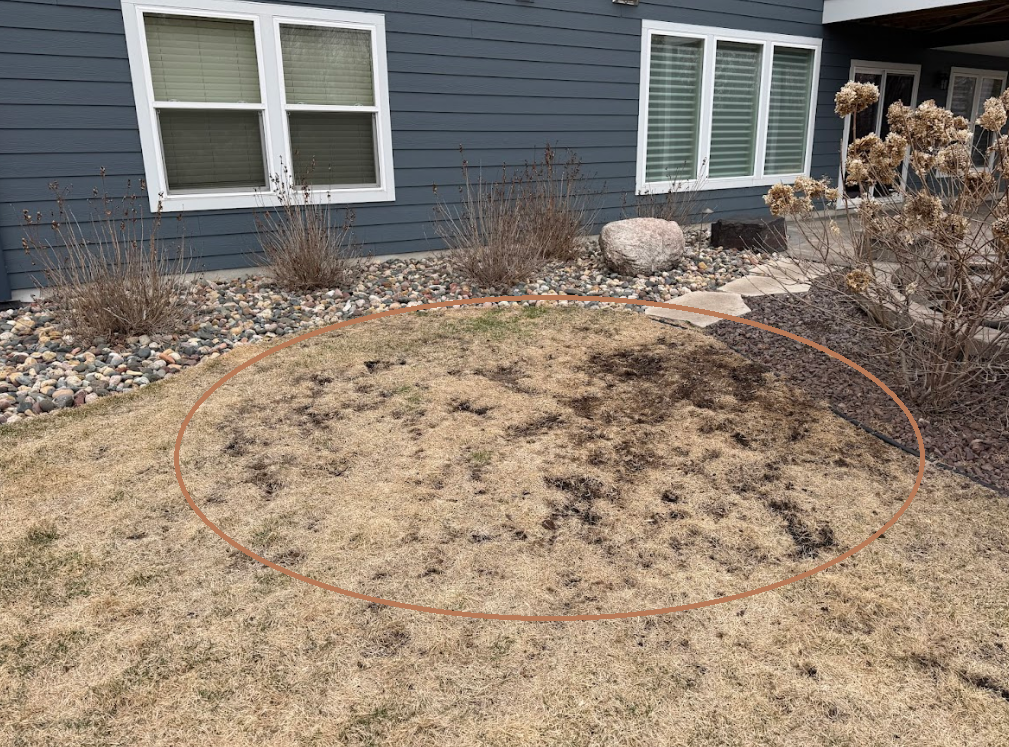
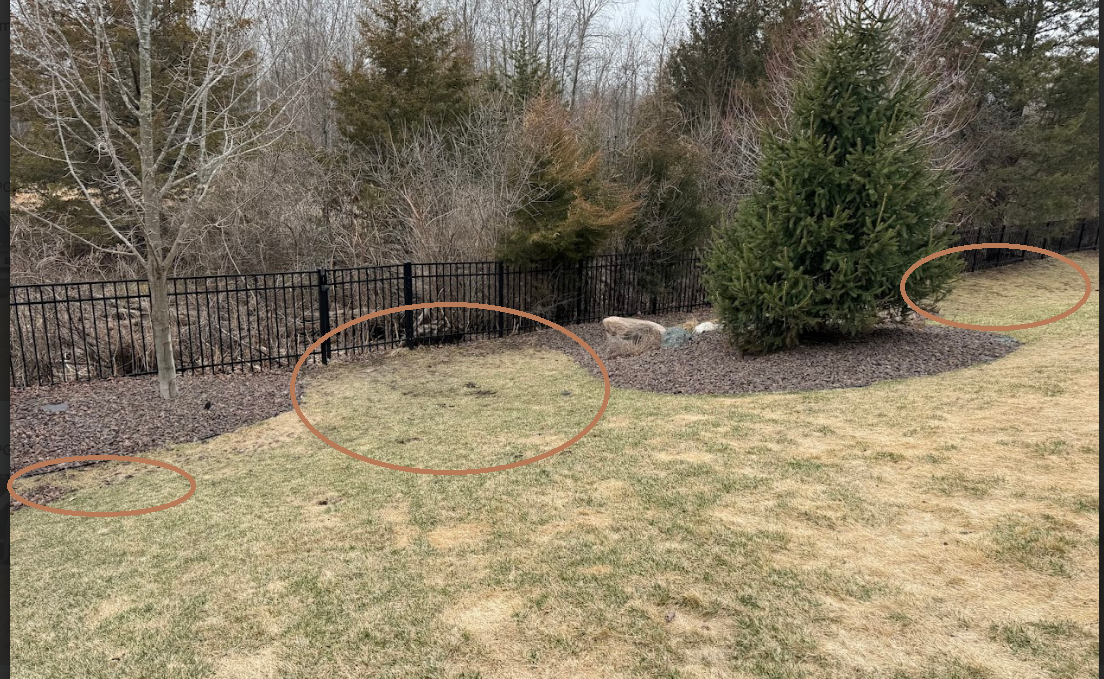
We started with an on-site consultation to evaluate soil conditions, turf health, and overall backyard performance. This assessment helped identify the underlying factors contributing to the lawn’s decline and uneven surface.
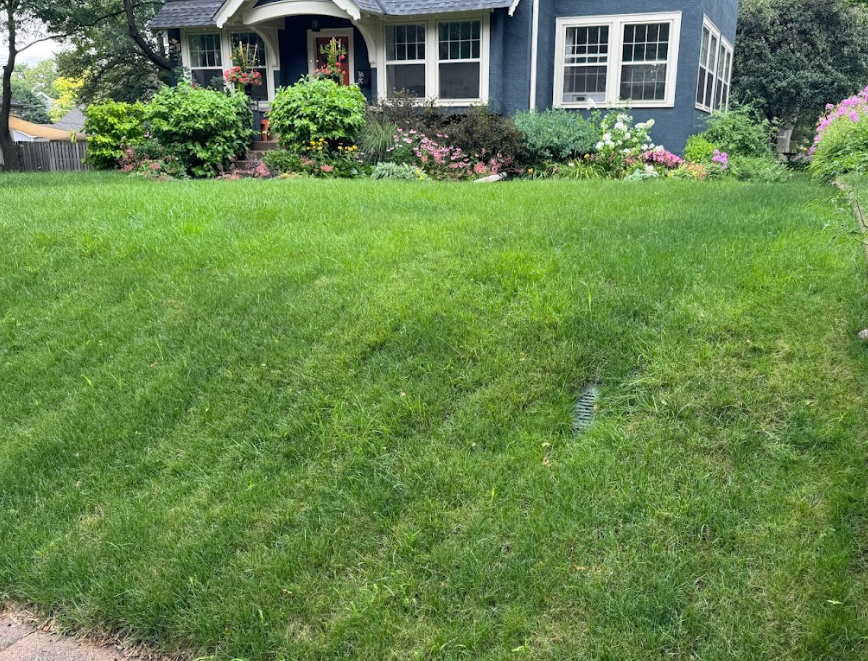
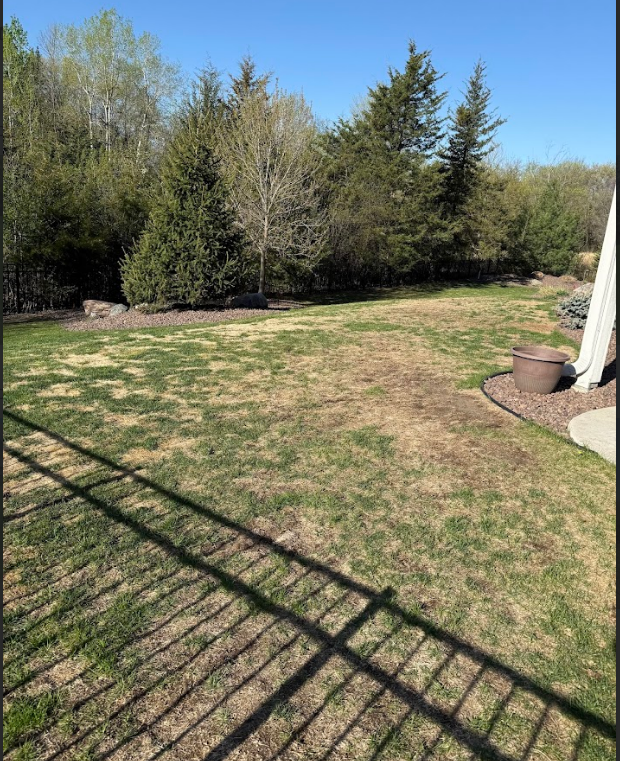
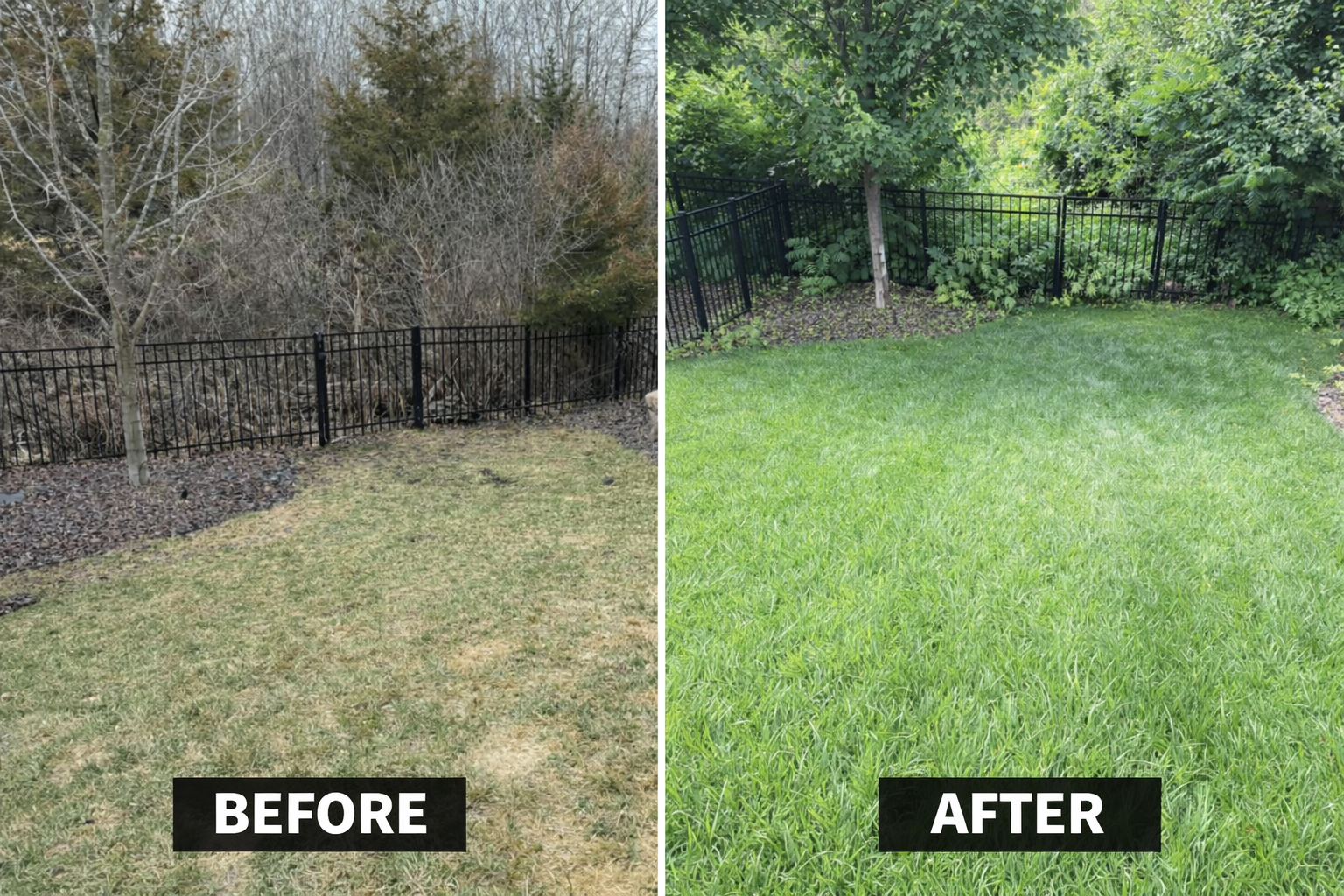
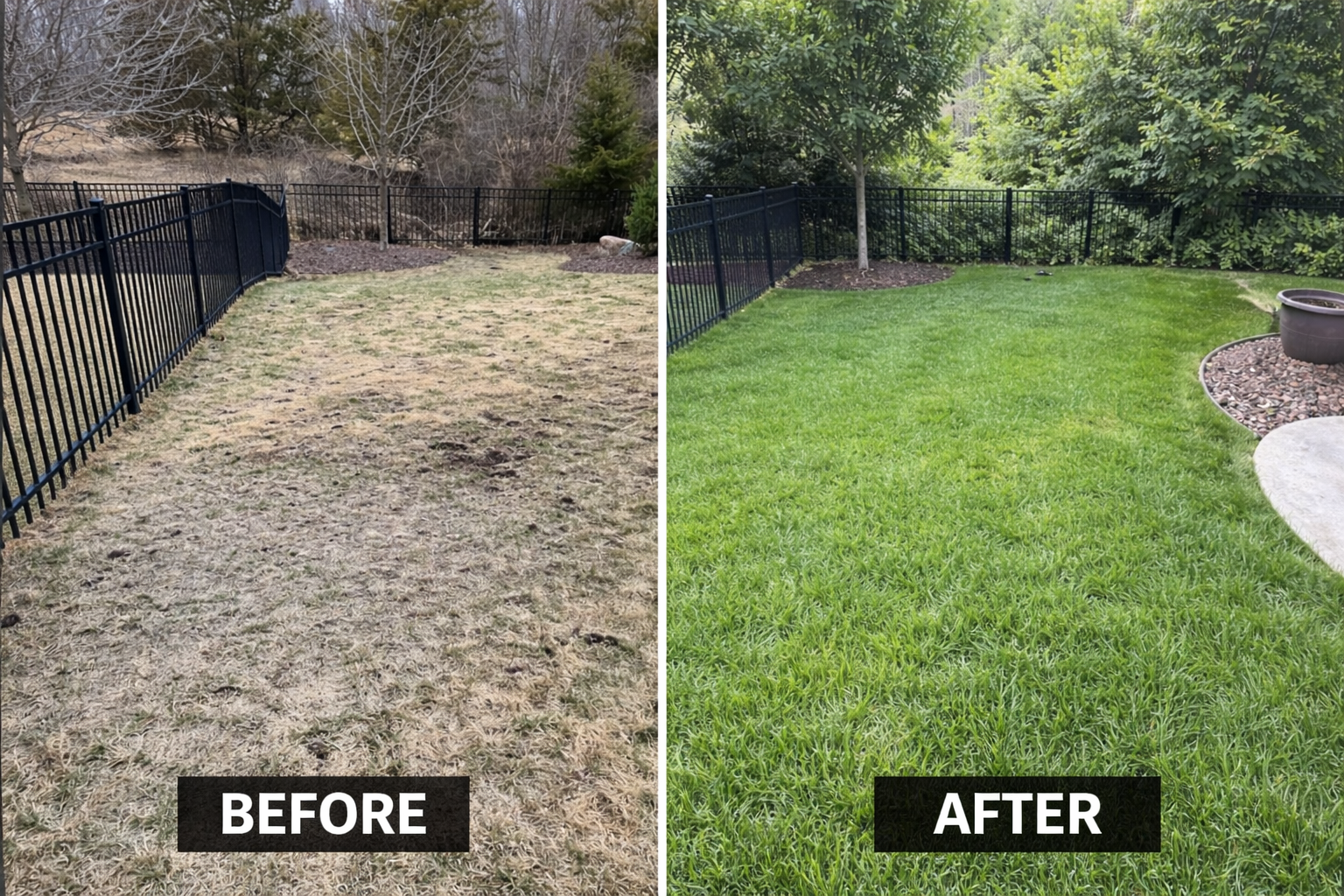
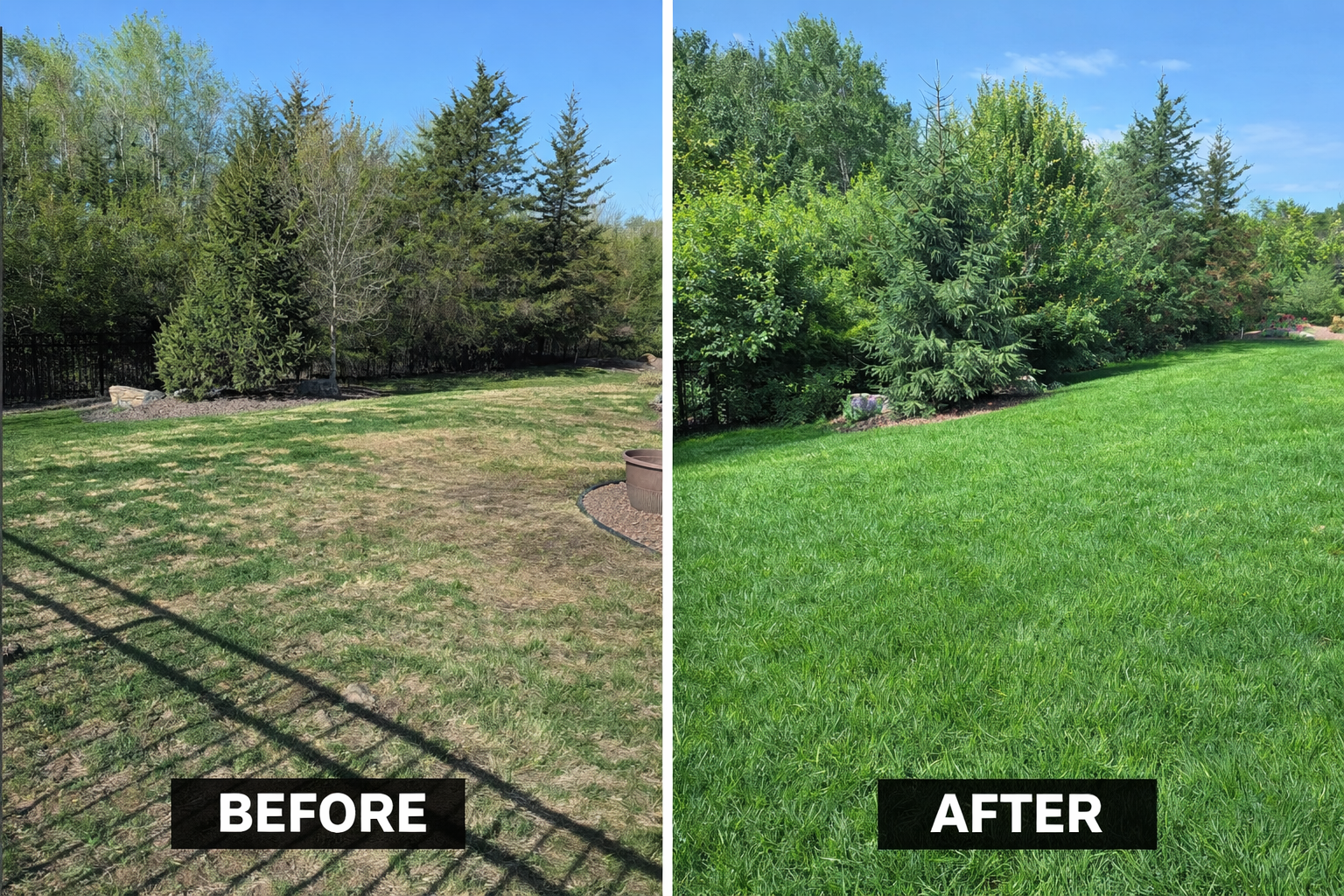
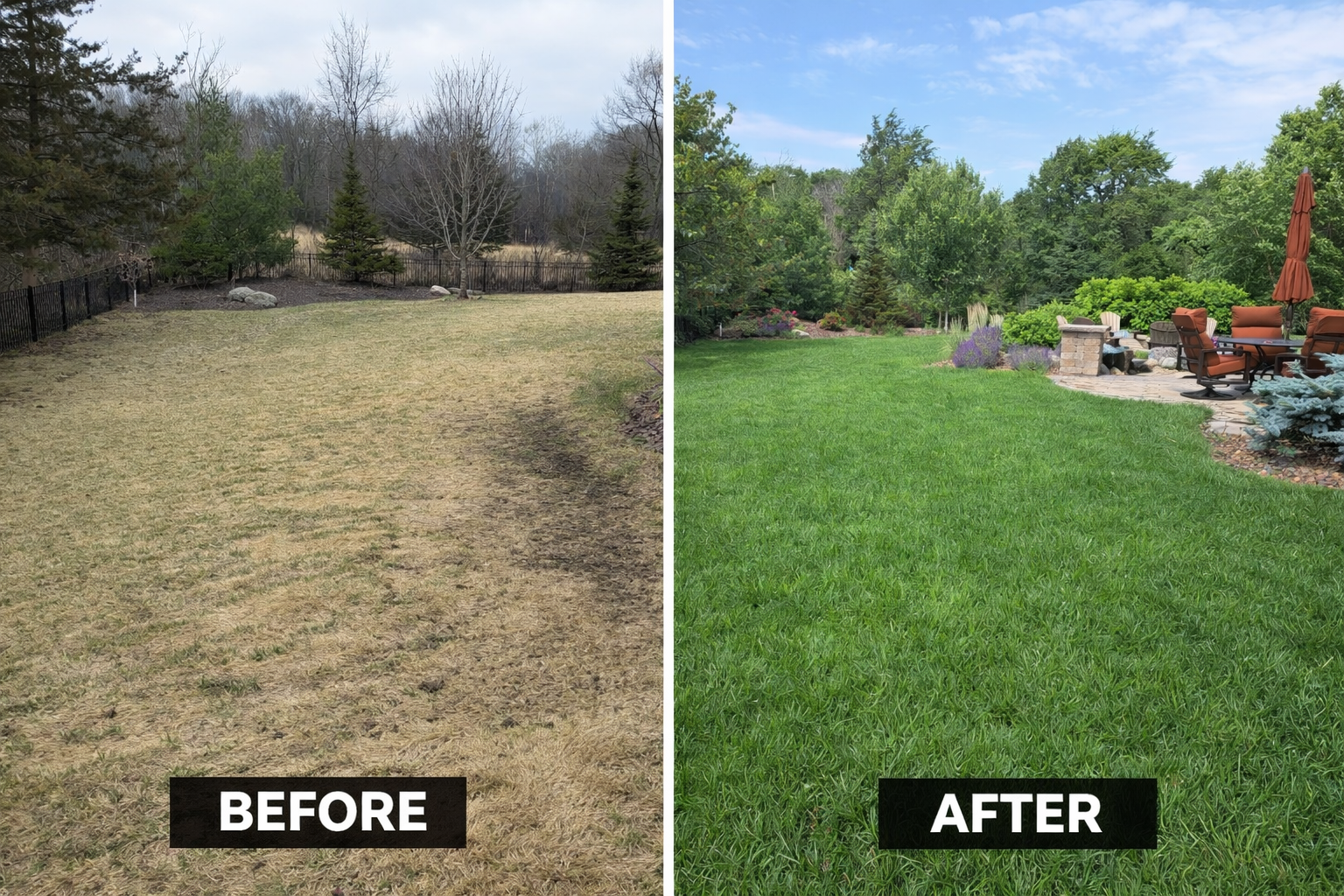
Throughout the yard, we noticed a consistently thin and patchy turf. What's more, there were also numerous spots around the yard that were bare altogether. Further assessment would diagnose precisely why the grass quality was as low as it was.
One reason why is that we learned our client owns multiple dogs. Dog ownership had taken a particular toll on the lawn. The wear and tear that dogs can place on a back yard accelerated the turf damage that we saw, and, because outdoor dogs never really take a day off, their consistent activity never allowed enough time for the lawn to recover naturally.
The weakness of the turf exacerbated the poor quality of the soil. Summer storms also contributed to the lawn's condition by washing away what little topsoil remained in the ground. Without a strong root system, the yard's topsoil was more susceptible to erosion by wind and water. This erosion and ensuing topsoil loss also left behind a hard, clumpy, and uneven surface throughout the yard.
The nature of that hard and clumpy surface was the low-nutrient, clay-heavy soil that encumbered good growth. The soil's high clay content made it more likely to experience compaction from heavy foot traffic and lawnmowing, which in turn limited the ground's ability to store water and nutrients.
Finally, we noted that the yard received major sun exposure with little shade. While urban neighborhoods tend to have densely tree-lined streets that provide generous cover to their lawns, exurbs such as Maple Grove are more likely to feature an open sky. This can provide a bright and airy feel to homes' interiors, but just as direct sunlight prematurely ages our skin, it can prematurely age our lawns, too. Without the sufficient turf density to make the most of this yard's high-UV diet, it was no surprise that grass found itself beaten down by the sun.
Options We Considered to Revitalize the Lawn
Lawn Grading and New Sod Installation
When lawns have significant unevenness and poor turf coverage, regrading the surface and applying fresh sod is often an ideal solution. Regrading, even without significant drainage concerns, presses the reset button on a lawn's elevation and creates a uniform, intentional surface.
Sodding the lawn provides a faster solution to low turf density than seeding. However, for this property, this option would have required removing existing, viable turf. Ultimately, new sod would not have addressed the underlying issue of too much lumpy and low-nutrient clay. Indeed, rolling new sod over problematic soil would have been landscaping's answer to a band-aid solution.
Mechanical Cultivation
With the compaction of the soil inhibiting the growth of the grass, simply breaking up the soil to resolve that compaction was an option as well. By using mechanical cultivation on the lawn, we would be able to loosen compacted soil while enouraging better water infiltration, ultimately improving surface conditions.
These were certainly objectives for our team, but on its own, cultivation would not have addressed another objective: repairing the many bare spots amid the lawn and replenishing lost soil.
Aeration and Overseeding Only
Core aeration paired with overseeding is a one-two punch our team often uses to thicken a thinning lawn. First, deeply aerating the soil by removing a matrix of tiny plugs from the lawn not only loosens compacted soil but also improves seed-to-soil contact, encouraging growth. Following aeration with overseeding, or planting fresh grass seed over existing grass without removing the current layer, supports long-term turf density.
Given the extent of bare spots and soil loss, however, we were reluctant to commit to overseeding a lawn that may not have had the nutrients necessary to sustain new seed. And while aeration can breathe new life into lawns, this approach alone would not have sufficiently addressed the lumpiness and unevenness of the lawn's surface.
Topdressing with Compost, Aeration, and Specialty Overseeding
We explored a variant of topdressing that would allow us to improve both soil quality and turf density using a premium seed blend and organic soil amendment. While typical
topdressing treatments involve a layer of topsoil, this process would apply a compost-based topdressing to add organic matter and nutrients, helping to supplement the clay-heavy, nutrient-deficient soil. Following the compost layer and a round of aeration, we would overseed the lawn using the Big 9 Athletic mix, which contains a blend of bluegrass and ryegrass varieties designed for full sun and durable turf performance. This seed blend would be ideal for the amount of sunlight the yard receives. Together, these steps would seed-to-soil contact while supporting stabilization of bare areas and long-term turf establishment. This approach would address multiple underlying issues but would require careful coordination to ensure consistent coverage and recovery across the most severely affected areas.
Our Chosen Solution: Compost Topdressing with Specialty Overseeding
After reviewing the available options, our client decided to proceed with our three-step approach of topdressing with compost, aeration, and specialty-seed overseeding. The client chose this solution because it best addressed the root causes of the lawn’s decline while preserving the existing turf and avoiding a full lawn replacement. After our team explained the differences between standard seed blends and premium options, the homeowner requested a specialty mix designed for durability and full sun exposure.
This solution was ideal for both improving soil conditions and turf performance in one pass. Compost topdressing and aeration helped rebuild soil structure, increase nutrient availability, and relieve compaction in the clay-heavy backyard. Overseeding with the Big 9 Athletic seed mix introduced durable bluegrass and ryegrass varieties that would ensure dense coverage capable of withstanding long-term use.
Together, this approach stabilized bare and eroded areas, corrected uneven surfaces caused by soil loss, and supported healthier, more resilient turf growth, delivering a balanced, long-term solution tailored specifically to this Maple Grove property.
How We Revitalized the Lawn with Topdressing, Aeration, and Overseeding
Site Preparation and Double-Pass Lawn Aeration
KG Landscape began the project with a double-pass core aeration across the entire backyard to relieve soil compaction and prepare the clay-heavy soil for improvement. This step was critical for allowing organic material, seed, and nutrients to penetrate the surface of the soil rather than accumulating on top.
A double-pass aeration means the lawn is aerated twice in different directions, usually in perpendicular or intersecting paths. While many lawn services perform aeration once, KG Landscape prefers double passes on challenging properties because it significantly increases the number of soil openings. This is especially important in clay-heavy soils such as this one, where compaction restricts root growth and limits water and nutrient movement.
The additional aeration would allow the compost topdressing in the next step to work into the existing soil profile without the need for tilling or reseeding. Core aeration plugs lent outlets for the compost to work into the soil, improving structure and creating a better growing environment for both new and existing grasses.
Double-pass aeration also supported better seed establishment. By creating more openings in the soil, seed was able to settle into protected areas below the grass surface, reducing the risk of washout during rainfall and improving germination consistency. This approach helped secure seed in place while the lawn began to recover and fill in. By taking this extra step, KG Landscape ensured the topdressing and overseeding work delivered lasting results rather than short-term surface improvement.
Compost Topdressing for Soil Improvement
With the ground well-aerated, we applied our compost-based topdressing across the lawn to introduce organic matter and nutrients to the soil. This step improved the clay-heavy soil profile while also rebuilding the most eroded areas of the lawn.
Overseeding with Big 9 Athletic Seed Mix
Once the ground was primed for overseeding, we used the Big 9 Athletic seed mix, a premium turf blend designed for high-traffic and high-wear environments. This professional-grade mix is commonly used on athletic fields, parks, and institutional properties because of its ability to establish quickly, recover from stress, and maintain dense, uniform coverage over time.
The Big 9 Athletic mix is made up of 60% Kentucky bluegrass and 40% perennial ryegrass, combining durability with rapid recovery. Its specific composition includes Cadet, Arrowhead, and Jewel Kentucky bluegrass varieties paired with Homerun and Apple II GL perennial ryegrass. These varieties are selected for deep rooting, improved disease resistance, drought tolerance, strong color, and the ability to withstand repeated use.
Compared to more standard seed mixes, the Big 9 Athletic blend uses newer turfgrass varieties developed by Ramy Turf, a local seed company that works closely with the University of Minnesota, for improved real-world performance. Turfgrass genetics continue to advance, and this mix reflects those improvements by offering better stress resistance, faster recovery, and longer seasonal color.
For this backyard, which experienced heavy wear from dogs and thinning turf coverage, selecting a high-performance athletic-grade seed ensured the lawn could not only fill in bare areas but also hold up over time against demanding conditions. By using one of the best-performing seed options available, KG Landscape helped create a healthier, more resilient lawn built for long-term durability.
Integrating Soil and Seed into Existing Turf
Following overseeding, our team used a lawn-leveling metal drag mat to further incorporate the compost into the turf where needed. We gave additional attention to stabilizing uneven and bare sections of the lawn to support consistent recovery.
Weed Control and Starter Fertilizer for Successful Turf Establishment
To further support positive growth, KG Landscape paired Mesotrione weed control with a phosphorus-rich starter fertilizer to support new grass establishment while minimizing weed competition during the most critical growth phase.
Mesotrione is a selective herbicide commonly used during overseeding and renovation projects. Unlike traditional crabgrass pre-emergents, which prevent all seed germination, Mesotrione suppresses crabgrass and certain broadleaf weeds while still allowing desirable turfgrass, such as Kentucky bluegrass and perennial ryegrass, to establish.
To further support establishment, a starter fertilizer, 21-22-4, was applied at the same time. Starter fertilizers differ from standard lawn fertilizers because they contain higher levels of phosphorus, a key nutrient that promotes early root development and improves germination success. Phosphorus, which encourages faster and more consistent seed germination while promoting stronger root development in new grass plants, increases the overall success rate of overseeding projects.
However, the state of Minnesota limits phosphorus use to seeding or repairing lawns, making starter fertilizer the appropriate and responsible choice for this type of renovation. By combining Mesotrione weed control with a phosphorus-rich starter fertilizer, KG Landscape created an ideal environment for new grass to establish quickly, face less weed competition, and develop stronger roots from the start—setting the foundation for a healthier, more resilient lawn.
The Result of Our Three-Part Approach
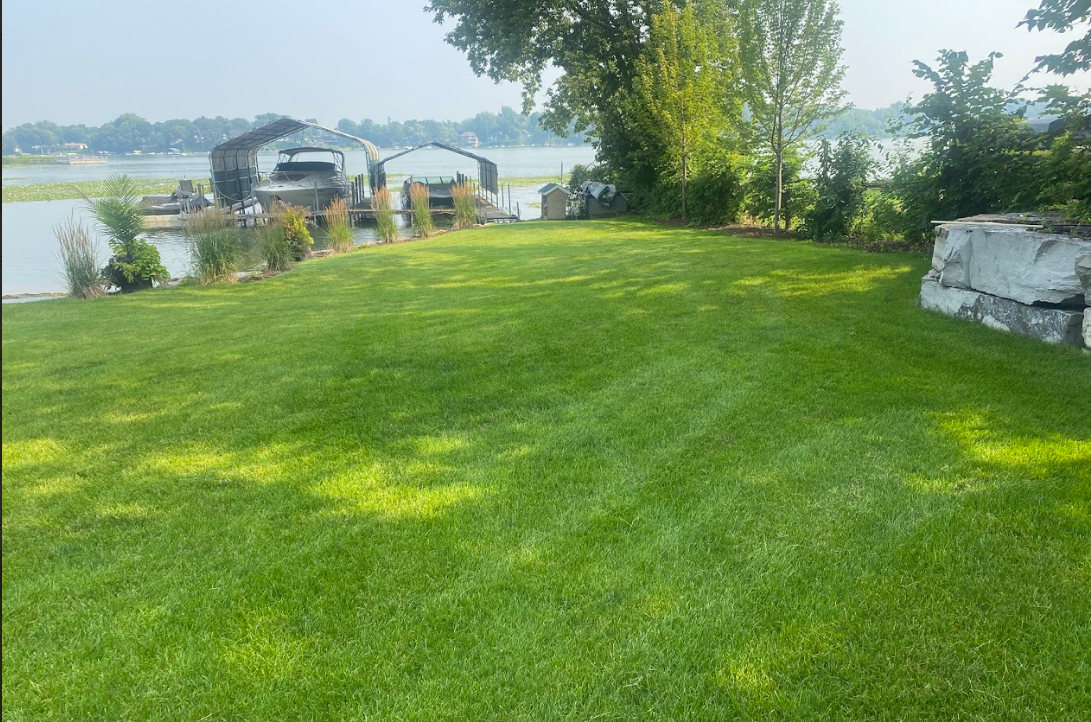
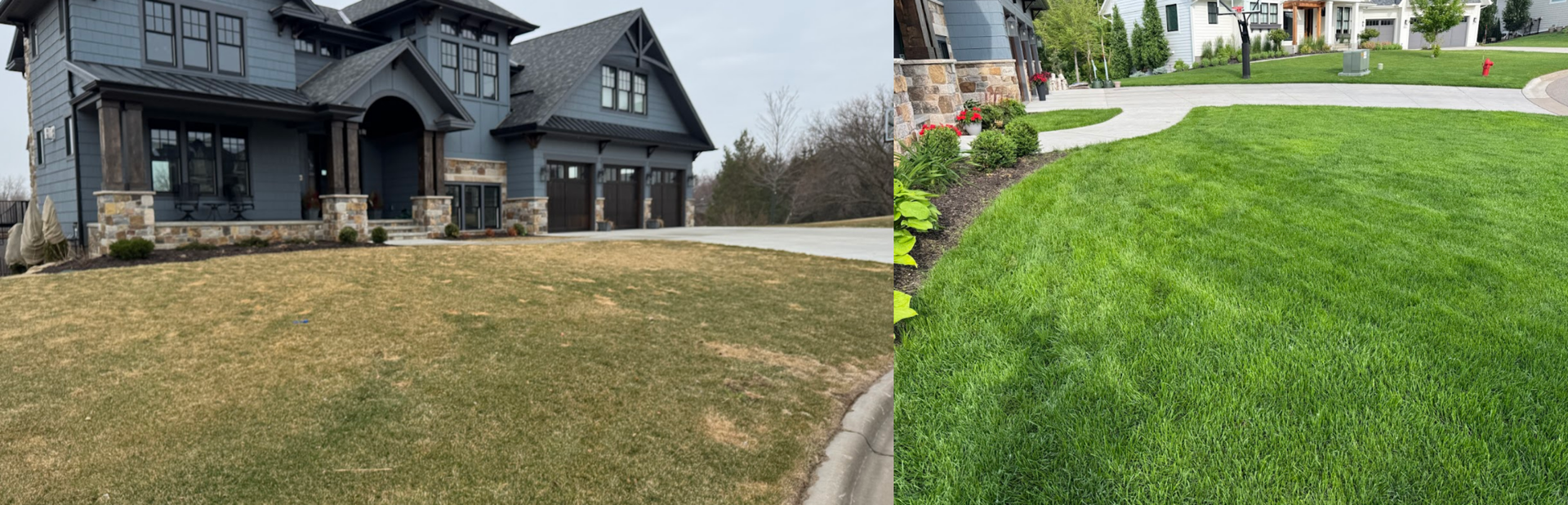
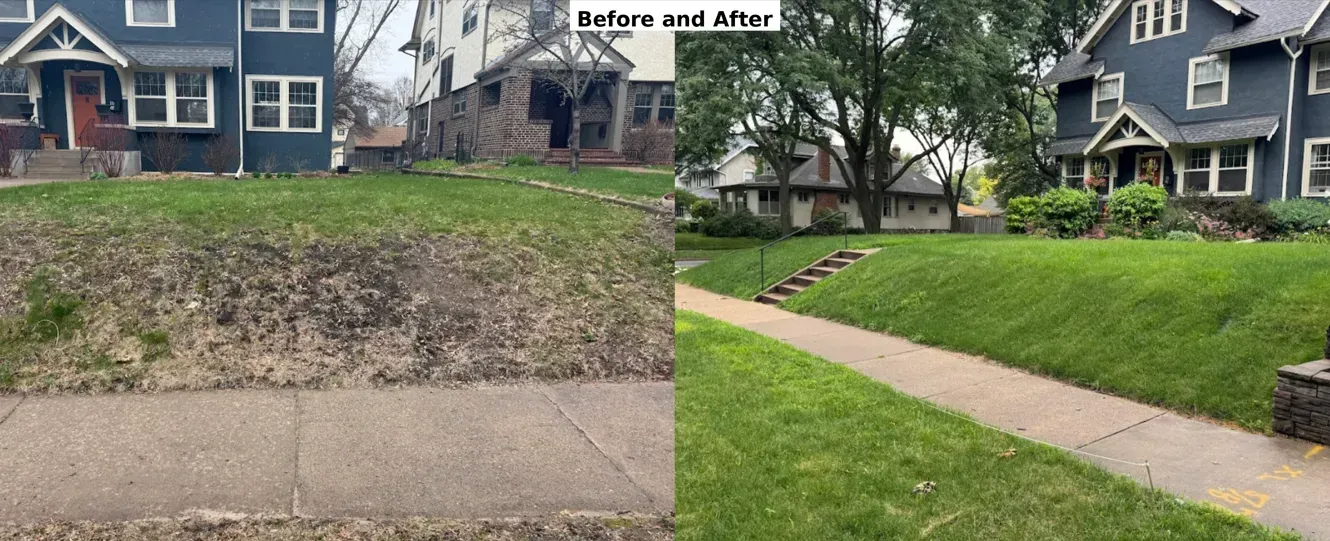
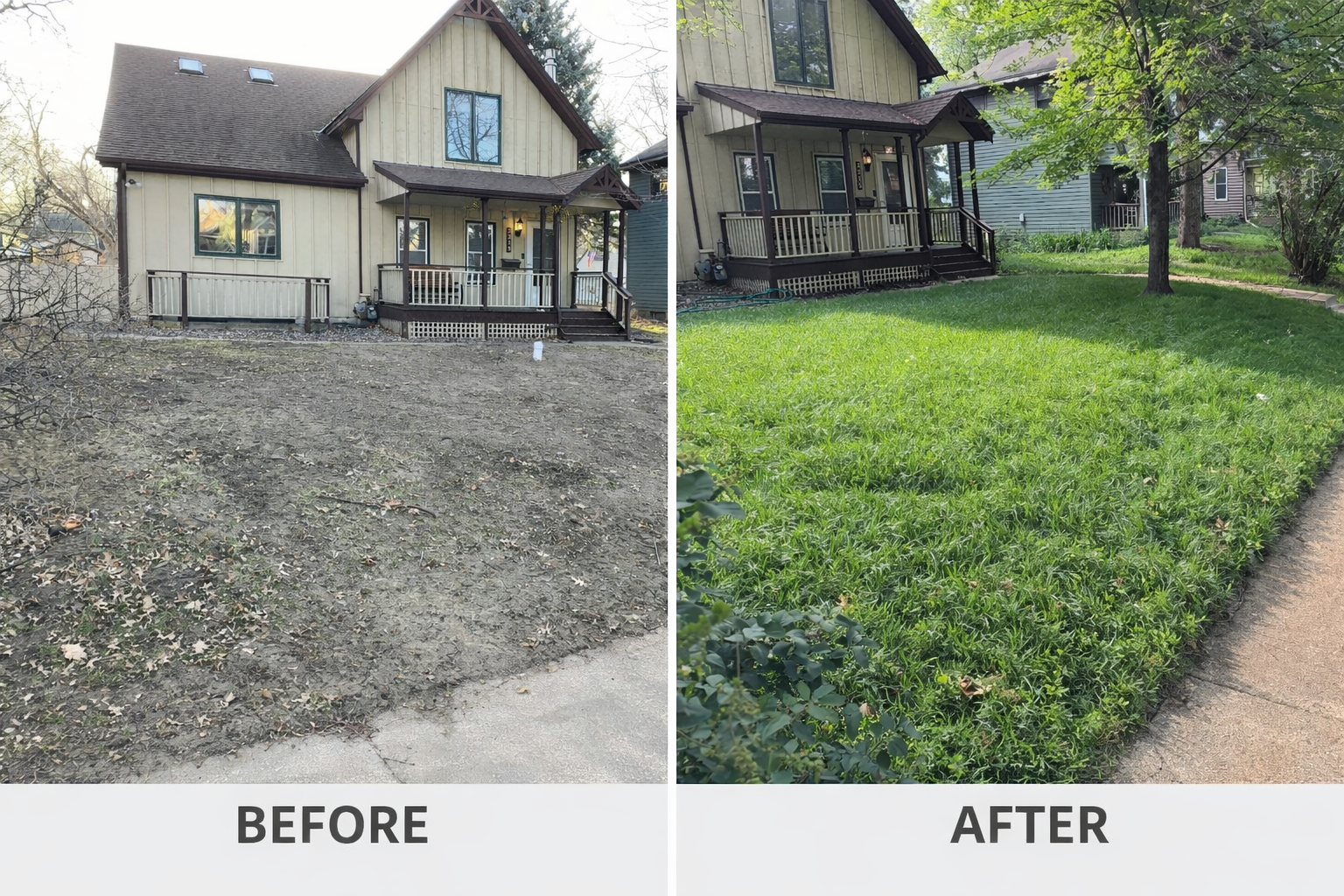
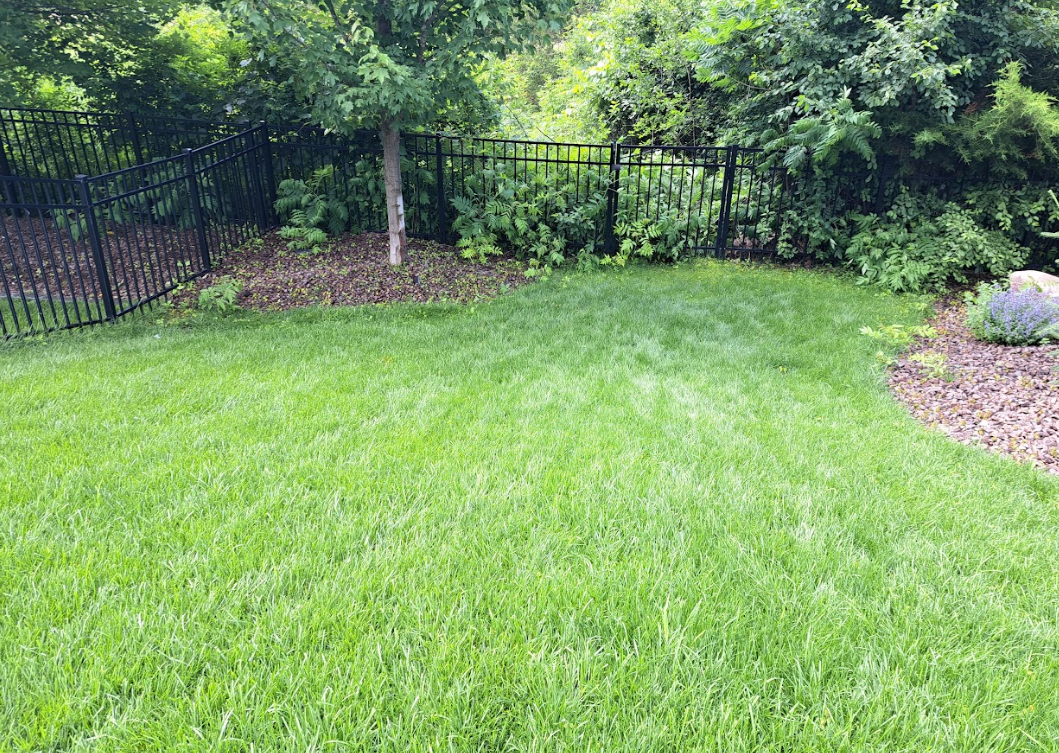
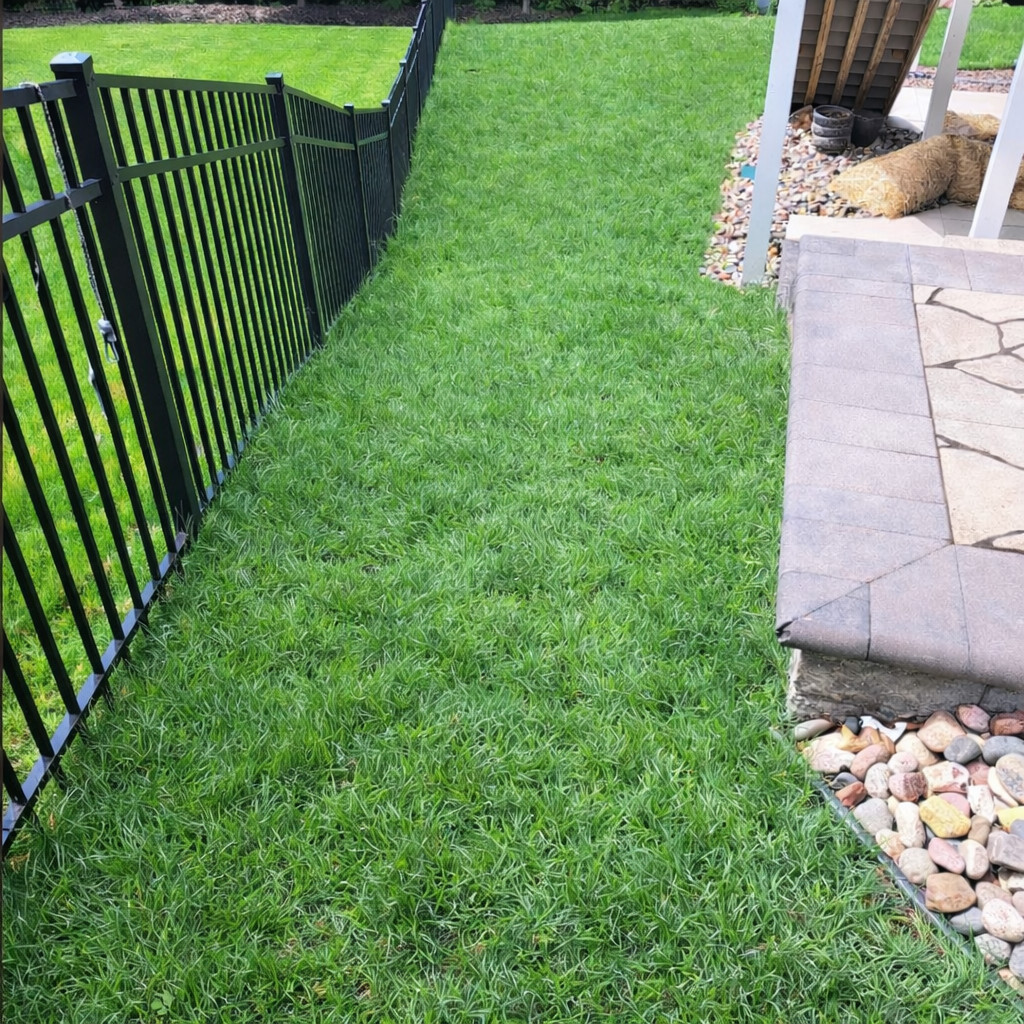
Combining aeration, compost topdressing, and overseeding allowed this Maple Grove lawn to improve both its soil conditions and turf density. Relieving compaction and amending the clay soil created a healthier growing environment, while the Big 9 Athletic seed mix helped establish stronger, more resilient turf. As the grass filled in, previously bare and thinning areas stabilized, reducing soil erosion and washout during rainfall. The lawn developed more uniform coverage, improved surface stability, and a noticeably healthier appearance, restoring the backyard’s usability and long-term performance.
Why It Worked for This Maple Grove, MN Home
The clay-heavy conditions of Maple Grove soil were not making it easy for any lawn, with or without dogs, to thrive. By applying double-pass aeration to the compacted soil, we were able to welcome nutrients, air, and water back into ground that was too dense to accept them fully. Our compost-based topdressing improved the structure of the soil while filling the low spots that settling, compaction, and washout had left behind. Moreover, improving those low spots reduced unsightly and damaging pooling on the lawn, not only evening the surface but also its drainage.
Overseeding with the Big 9 Athletic seed mix established dense, durable turf suited for the heavy-sun conditions this yard receives. That same newly dense turf was now better equipped to prevent future erosion and washout, even as the elements will try to take their toll.
By matching the solution to the property’s soil type, sun exposure, and surface irregularities, KG Landscape delivered a long-term improvement that restored lawn health and created a more stable, usable backyard in Maple Grove.
Thin Grass, Uneven Soil: Can You Relate?
There can be many reasons why turf doesn't take hold the way it should. For this Maple Grove client, it was a confluence of poor soil, heavy traffic, heavy sunlight, and the wrong kind of grass to thrive in those conditions. If you find that your lawn doesn't have the coverage it should, KG Landscape may be able to help. By assessing the unique conditions of your lawn, we can provide tailored solutions that will give you the lush and verdant space your home deserves.
Ready to Start on Your Next Project?
Call us at (763) 568-7251 or visit our quote page.