If you have water pooling in your yard, you likely already know you have a drainage problem. Luckily, there are
a lot of solutions, and you’re sure to find one that works well with your particular issue. We’ve already covered
rain gardens
,
dry wells,
French drains, proper grading, and solutions for water pooling on your patio
or
driveway. What more could there possibly be, you ask? A dry creek bed.
Dry creek beds can be used to prevent erosion, especially on slight slopes in your yard where water would otherwise gush toward a flat surface. No one likes the look of flattened grass or a muddy path, so here’s a rundown of the what, where, why, and how of dry creek beds.
What
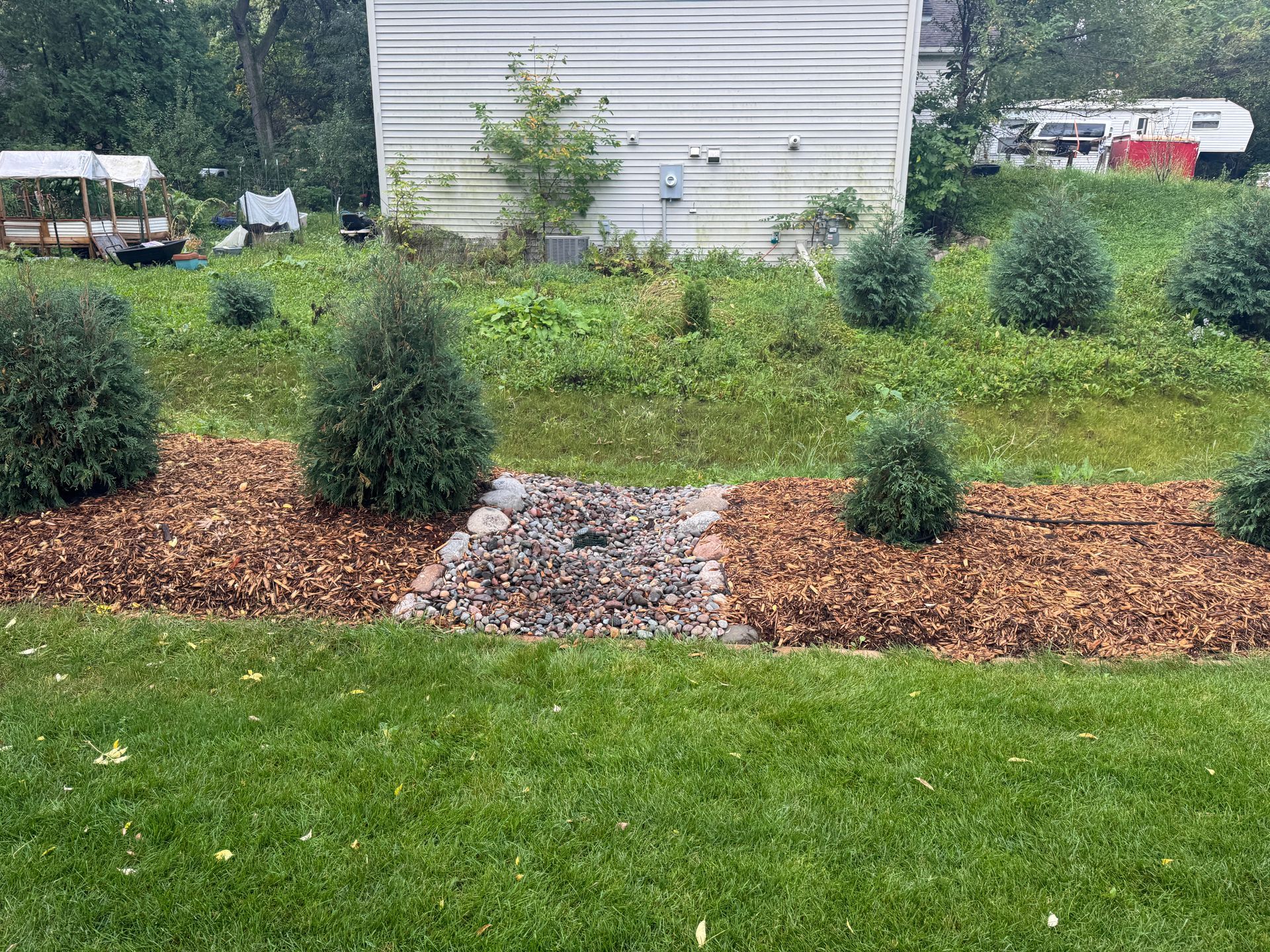
A dry creek bed is exactly what it sounds like: a slightly sunken path that is dry most of the time and functions as a mini creek when it rains.
Where
Dry creek beds can be used in a swale or any low point where water flows during a rainstorm. Rather than changing the path water takes, dry creek beds use that same path. Dry creek beds can be surrounded by garden beds, or can simply run through a section of lawn.
Why
Building a dry creek bed is a less invasive drainage solution, and they look great besides. They help decrease erosion where water usually runs during rainstorms, and can even increase your home’s curb appeal.
How
First, watch where the water flows naturally. This is where you’ll want to build your dry creek bed. This area doesn’t always need to be trenched out, but if you decide to, it can be a shallow trench, just enough to ensure the water takes that path. Keep in mind that a curved path will look more natural than a straight one.
After the path has been decided upon, we line the area with either a water-permeable fabric or a waterproof liner. A water-permeable fabric will allow water to filter into the soil along the path itself. A waterproof liner will allow water to quickly run down the dry creek bed, leaving it to drain away from the house. It’s important to have some sort of liner so the dry creek bed doesn’t become a mud bed.
Once the path has been covered in landscape fabric, it’s time for the rock. Dry creek beds can be made up of a variety of sizes of rock—it all depends on your individual project. For longer dry creek beds, say 20 to 30 feet long, we use a mix of larger rocks. For shorter beds, the rock wouldn’t need to be very large, perhaps a mix of two- to six-inch rocks. The benefit of using rocks two inches and up is that they’re less likely to shift and roll during a heavy rain. River rocks are a popular choice, as they’re already rounded, and look like they’ve been tumbled in a stream.
Extra Steps
After the dry creek bed is complete, there are endless ways to incorporate it into your landscaping. A popular option is to plan a garden bed around the dry creek bed, helping it blend into the landscape and look more natural. Plants near the dry creek bed will also soften the look of the rock.
If the dry creek bed is large enough, some people even like to build a bridge over it. It can be an ambitious project, but will add a great focal point to your yard.
Stepping stones can also be a fun addition to a dry creek bed. Kids will enjoy hopping on the large, flat stones no matter the weather. While these stones will interrupt the flow of water somewhat, it won’t be enough to impede its progress. Stepping stones will also create areas of splashing within the dry creek bed when it rains, which can be aesthetically pleasing.
Dry Creek Beds as Splash Blocks
Say you don’t have enough of a drainage problem to require a full dry creek bed, but your drain spout creates a muddy pool near your house. Splash blocks are a popular solution to get water a little farther from the house, but they aren’t very pretty. Using a dry creek bed as a splash block will save your grass or mulch from being washed away.
A dry creek bed that acts as a splash block will begin with a waterproof lining. We use this because it’s so close to the house, and we want to encourage the flow of water away. Rather than using larger rock, we stick to the two- to six-inch river rock in this case. The smaller rocks create a perfect path for the water, and give it the same look as a traditional dry creek bed.
Is a dry creek bed the right drainage solution for your yard? The experts at
KG Landscape are always happy to help, and will create a beautiful, customized dry creek bed for your yard. Give us a call today at 763-568-7251, or use our quote system to get in touch.