
When to Replace Your Mulching
Mulching has its benefits. From keeping your soil healthy to adding some incredible curb appeal to your home, mulching is a great way to add a functional aesthetic to your yard.
There are a ton of variables to consider when picking out your mulching. What color should you use? Where should you put it? When should you replace it? We’re going to go over some basic
mulch 101
and cover the best time to replace your mulching and keep your yard healthy and beautiful all at the same time.
The Basics
We’re going to start off with some basic mulching knowledge. That way, you’re not stuck with something you’re going to need to replace right away because it either doesn’t work or doesn’t look the way you wanted.
Types of Mulching
Shredded Bark
This is typically composed of cedar and pine. This type of mulching works best for gardens or yards on a slope because it interlocks, preventing it from washing away.
Bark Nuggets
Perfect for flat yards or gardens, bark nuggets need to be replaced less frequently because of its chunky consistency. This along with its size makes it far less likely to break down compared to other mulch types.
Pine Straw
This is typically only really used in the south, but we’re throwing it on the list for common knowledge. Pine straw needles don’t budge, making them great for slopes or hills.
Leaves/Grass Clippings
If you want a DIY mulching solution, you can make your own using grass clippings or some shredded leaves. If you’re using this for a garden with edibles in it, make sure these clippings or leaves haven’t been chemically treated
Mulch vs. Rock
There’s always a bit of an argument between rock and mulch users regarding which is better. The truth is that mulch
is
better for your soil and your yard . . . but there are more factors to keep in mind with organic mulch. Let’s quickly go through the pros and cons of each.
Mulch Pros
Mulch Cons
Rock Pros
Rock Cons
Mulch provides such a healthy alternative for your soil and plant life compared to rocks. While you may have to keep up some maintenance down the road, in the long run, mulching is far more beneficial for your yard.
Now That We Have the Basics Out of the Way
OK, now that we’ve covered some of the essential mulching knowledge, let’s get into how you can and should use your mulching—and when you should replace it.
Use it as an Accent
Mulching 101: The
color you pick out
will be determined by the exterior of your home. Some common color schemes are:
Brick Houses: Brownish/Red Pine Mulch
Gray Contemporary: Black Mulch
Terra Cotta/Golds/Warm Tone Homes: Red Mulch
These are just a few examples if you’re having difficulty selecting a color—
consult with a professional
to get some piece of mind. Either way, you want your mulching to compliment the rest of your home and yard. It should act as an enhancement, providing contrast where necessary and consistency where needed.
When Mulching
You’re going to want to remember a few tips and tricks of the trade. Mulching is a bit of an art and a science, so you’re going to need to experiment to get your solution just right. But there are some rigid foundations of mulching that don’t change much.
If you’re using organic mulch, we recommend leaving the landscaping fabric out of it. Not only can it look pretty terrible, but it also has the potential to prevent water from reaching your soil, which does far more harm than good.
Note: Don’t get your mulch from unreliable sources. It may seem like a cheap and easy solution but it can cost you a ton down the road. Bad mulch can come jam-packed with weed seeds, which will be a massive headache for you.
When to Replace Your Mulch
In the midwest, mulching has almost become a right of passage for the landscaping community. So how often do you need to do it? Well, it sort of depends on how visually appealing and functional you want your mulch to be.
The best season to re-mulch is in the Spring. This gives you some time before the leaves open and the heat kicks in. Another popular time to mulch is in late fall after a few touches of frost have done their part.
A good rule of thumb for low maintenance mulching is the annual approach. Once a year is a great middle ground for longevity and aesthetic. It’s easy to schedule out and make sure that it gets done once a year. 2”-3” will do.
You certainly can mulch every few years if you spread your mulch fairly deep (3” or 4”). While this is doable, it can be overdone and if it’s too thick it will starve your soil and suffocate plantlife. So if you’re taking the low-maintenance route, you have to be extra careful.
Note: For both the annual and low-maintenance route, it’s a good idea to clean out the old mulch or break it up a bit before you put down a fresh layer.
If you want the most visually appealing and healthy option, you can mulch twice a year (spring and fall). This will give you more options of switching up the color or mulch type along with providing your soil with some great organic mulching. This will give your soil, plant life and trees the most nutrients and moisture.
A Better Way to Landscape
Mulching provides that “finished look.” It’s a great way to add some aesthetic appeal and fresh nutrients to your garden or yard. It’s a popular landscaping practice here in Minnesota, as it adds so many benefits to your soil while looking incredible.
However, as we said, it is a bit of an art and a science. You have to be mindful of your overall landscape along with soil temperatures to get your ideal result. But adding in the right mulch can make landscaping and gardening a much smoother process!
Ready to Start on Your Next Project?
Call us at (763) 568-7251 or visit our quote page.
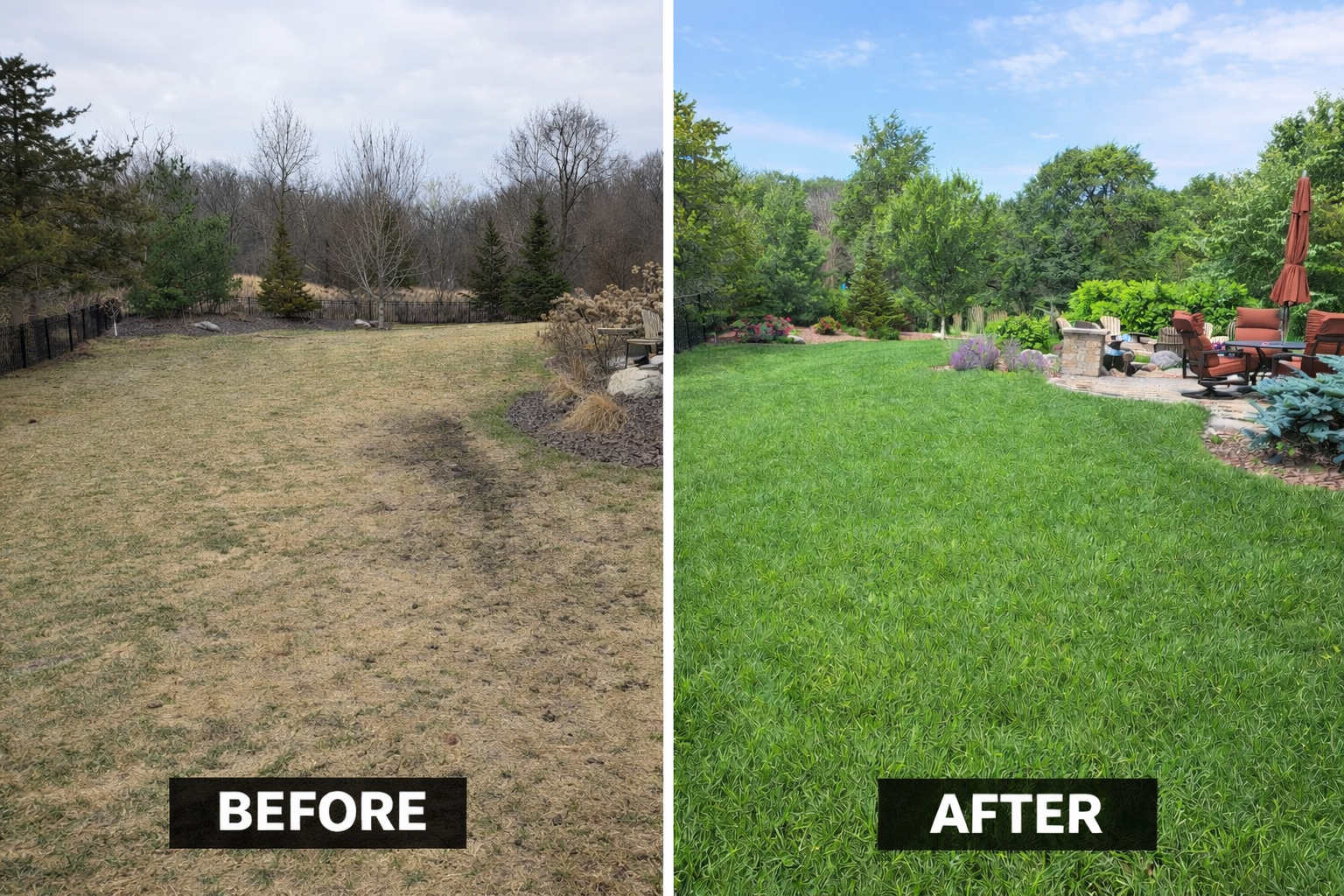
Some people like to use the phrase "nature is healing." However, in some cases, nature can't heal itself alone. That's where we come in. Recently, a homeowner in Maple Grove, Minnesota reached out to KG Landscape after struggling to revitalize a back yard that was simply failing to thrive. Despite what seemed like ample sunlight and water, the turf suffered from numerous thin and bare patches that refused to improve. To determine exactly why they couldn't get this yard to flourish on its own, our client asked us to assess the yard and determine a plan that could reinstate the lush green lawn they expected for their Maple Grove home.
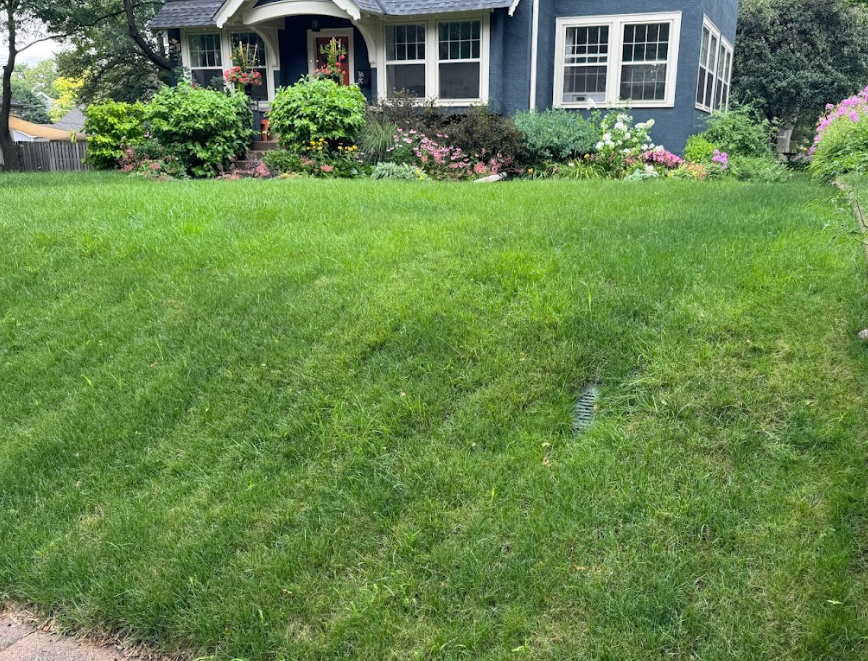
Seldom will you find a piece of landscaping less desirable than the unintentional water feature. That's why a recent client in St. Paul, Minnesota's Macalester-Groveland neighborhood reached out to KG Landscape. Poor drainage in their yard had begun to allow standing water to accumulate, which not only damaged the lawn but was also beginning to make its way into the home's foundation. Our assignment was to determine why this water was pooling where it was, then find a way to divert it to a safer outlet. In order to do so and to improve the health of this St. Paul lawn, our team developed a system of catch basins and underground drain pipes to capture and redirect rainwater. Additionally, we restored the damage standing water had done to the lawn with a full topdressing treatment combined with seed blankets in the most critical areas of the lawn. Upon completing the project, we successfully resolved the yard's drainage issues while also bolstering the health of the lawn.
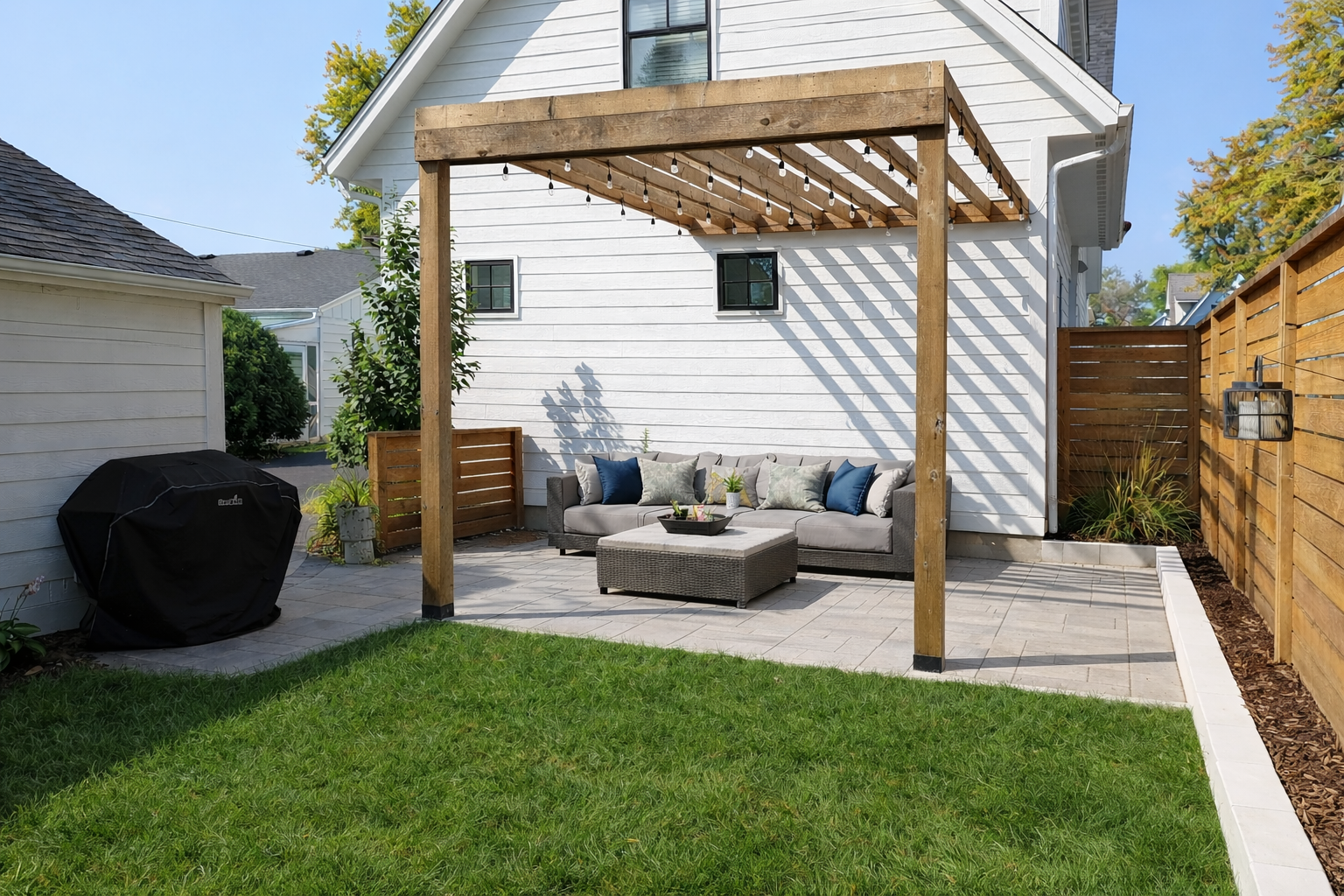
Faced with tight constraints in a small Edina backyard, our team devised a solution that created a comfortable patio along with increased privacy for our client.
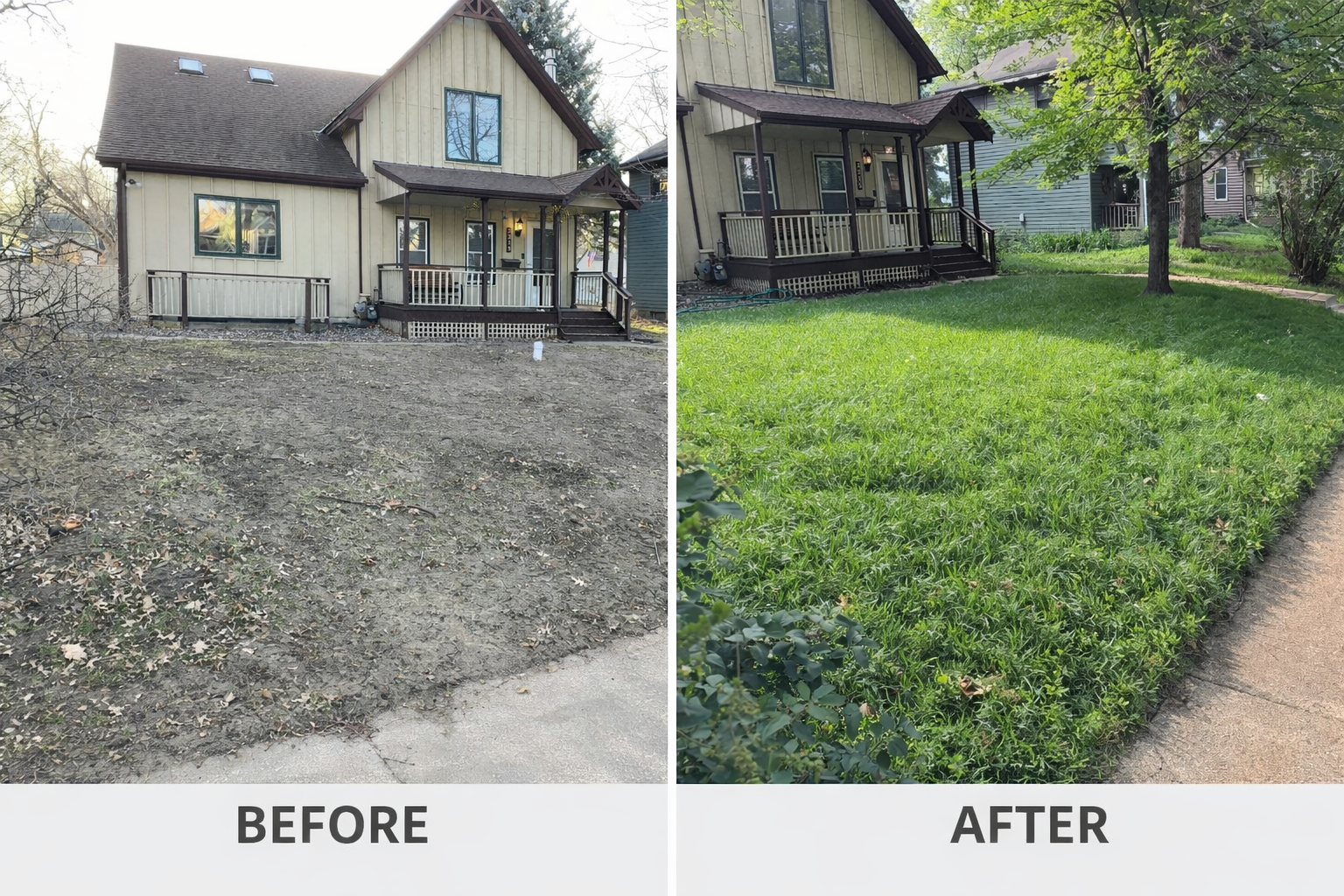
By employing double-pass aeration and overseeding, we were able to replenish a South Minneapolis lawn that had suffered years of neglect and was failing to thrive.
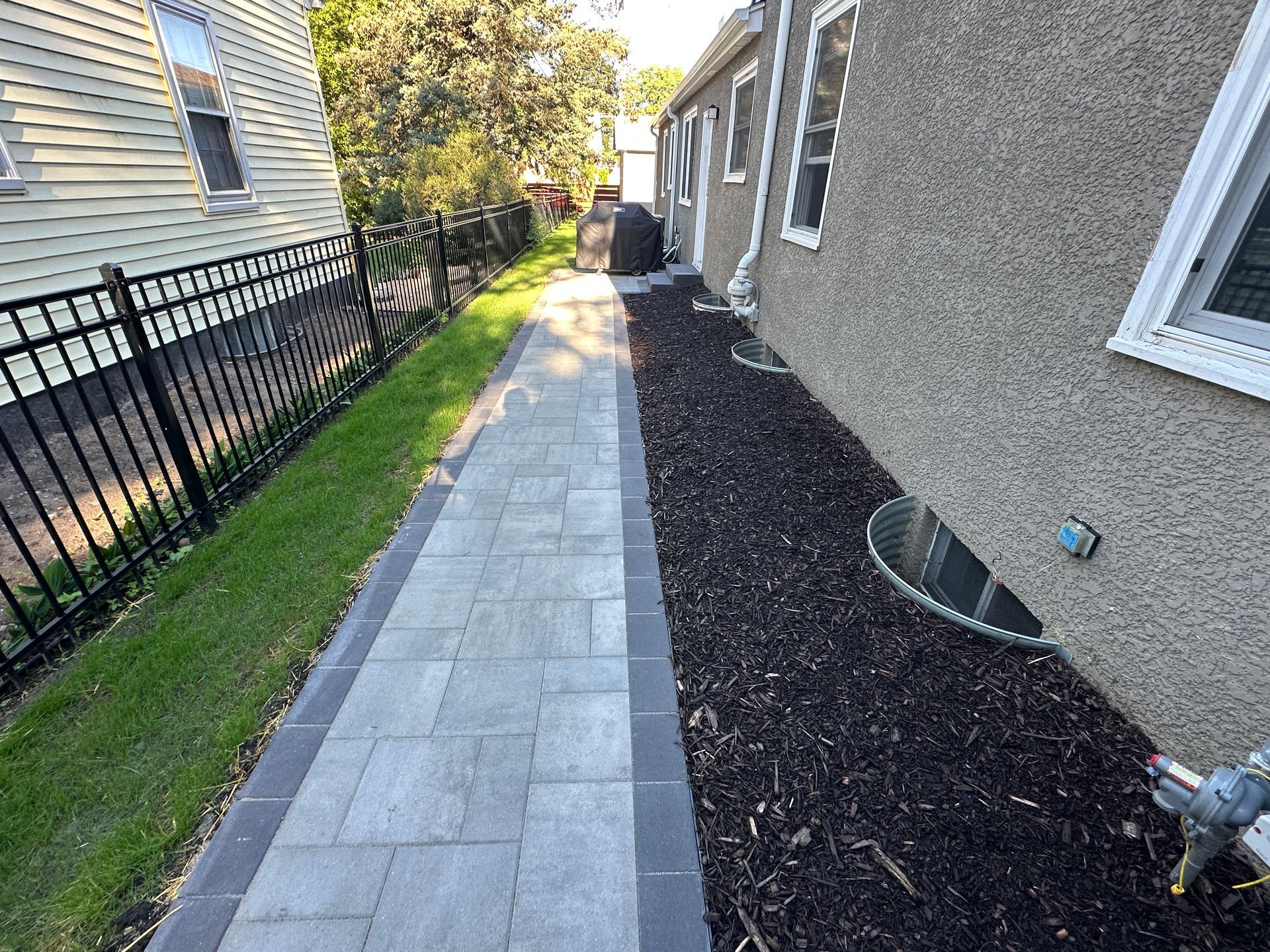
Learn why proper grading is essential before installing hardscapes and plantings. See how KG Landscape solved drainage challenges in St. Louis Park.
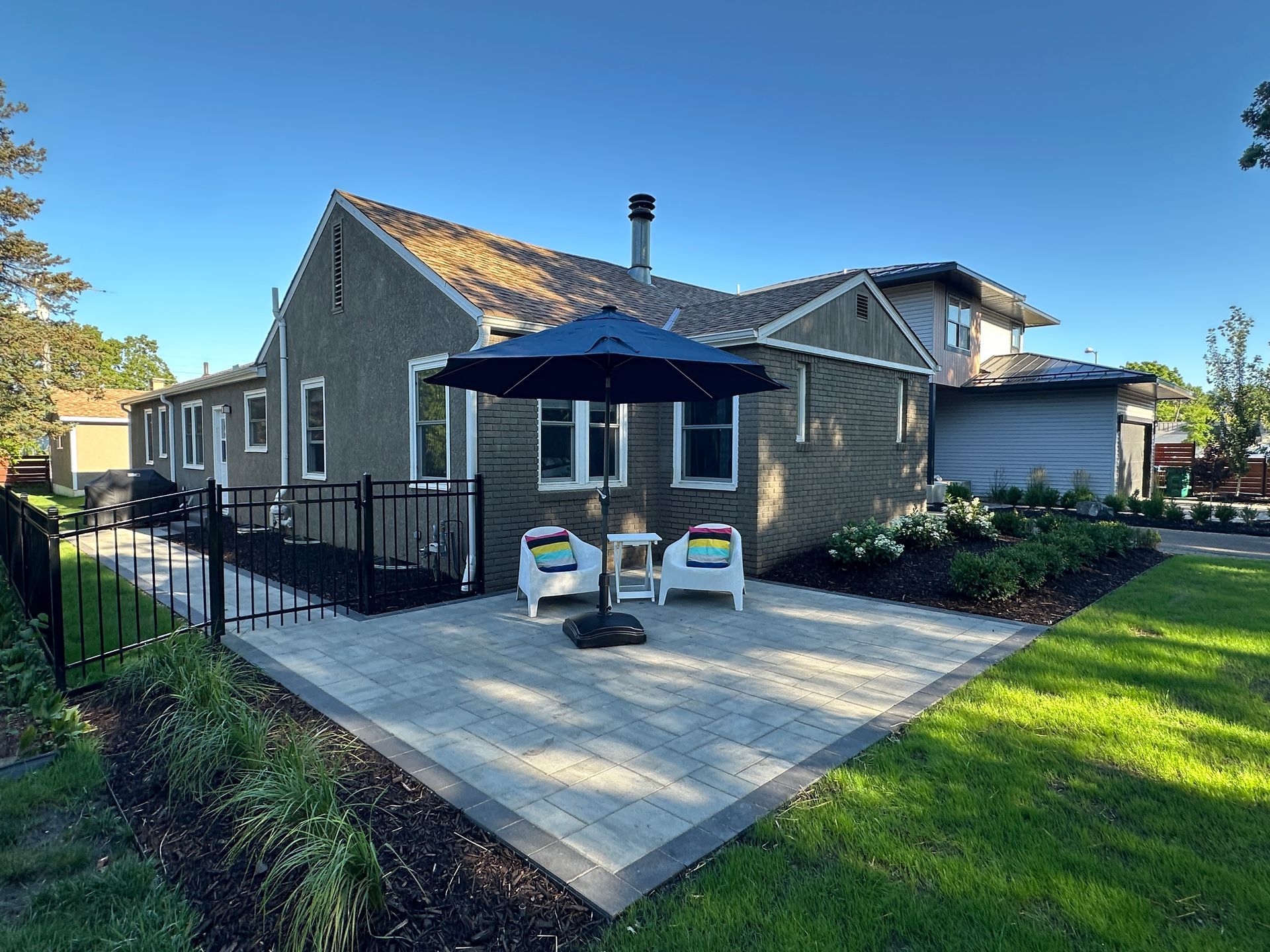
See how KG Landscape transformed a small St. Louis Park backyard into a functional outdoor living space with creative hardscape and planting solutions.
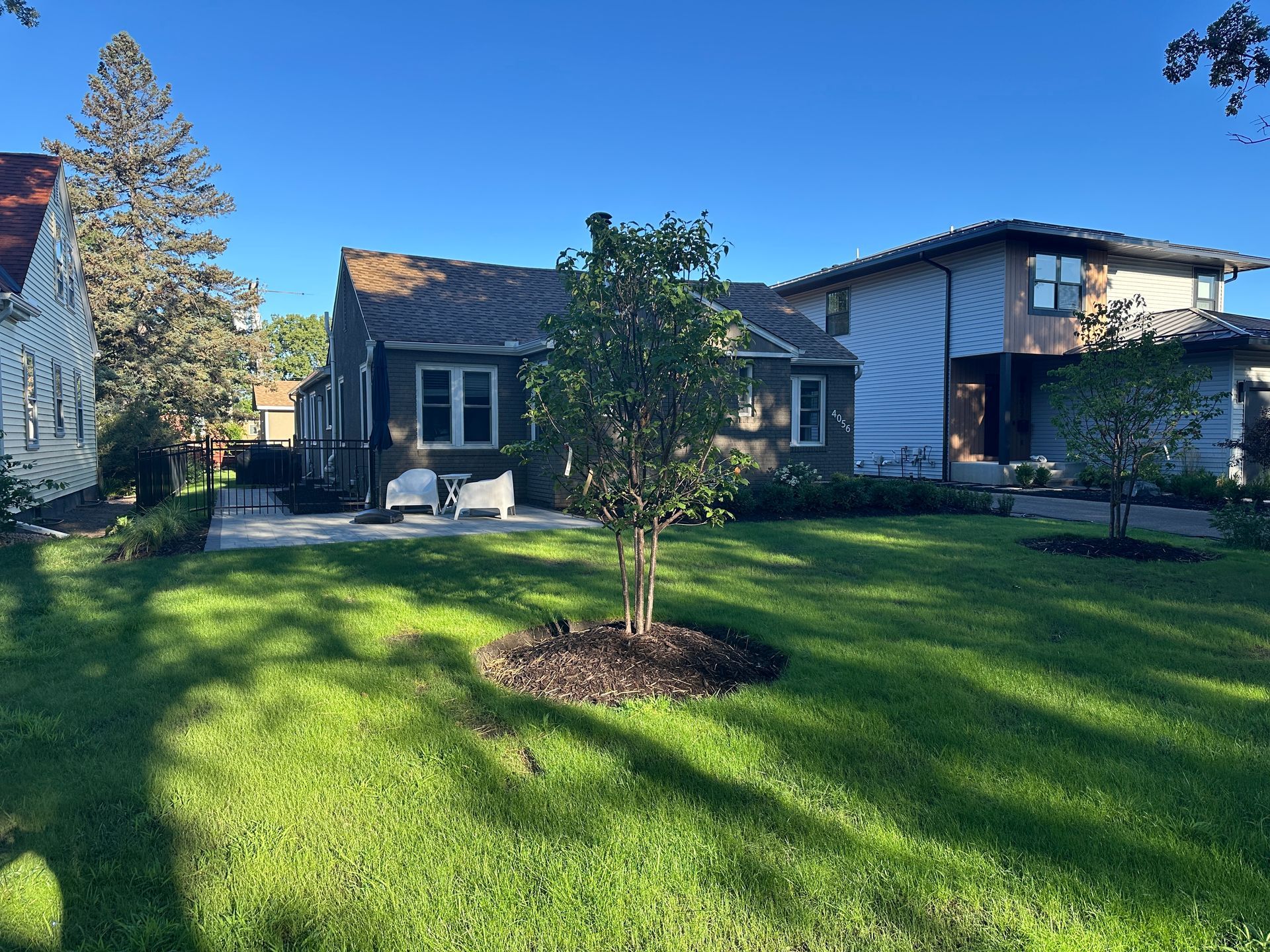
See how the team at KG Landscape created a beautiful new yard with a functional patio, updated landscaping, and improved curb appeal for a St. Louis Park, MN home.
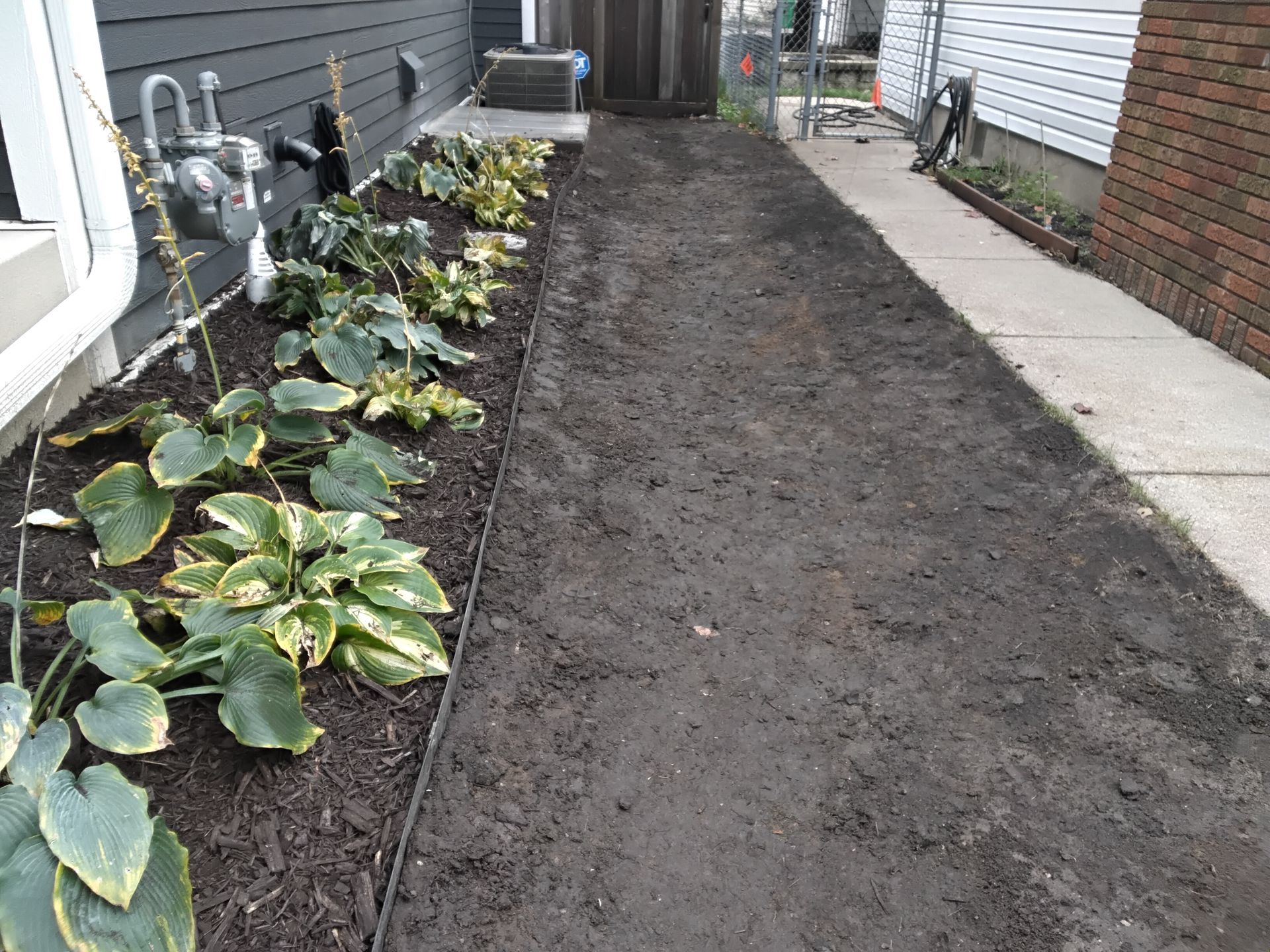
Struggling with side yard water problems in Minneapolis–St. Paul? See when French drains or re-grading works best for small yard drainage fixes.
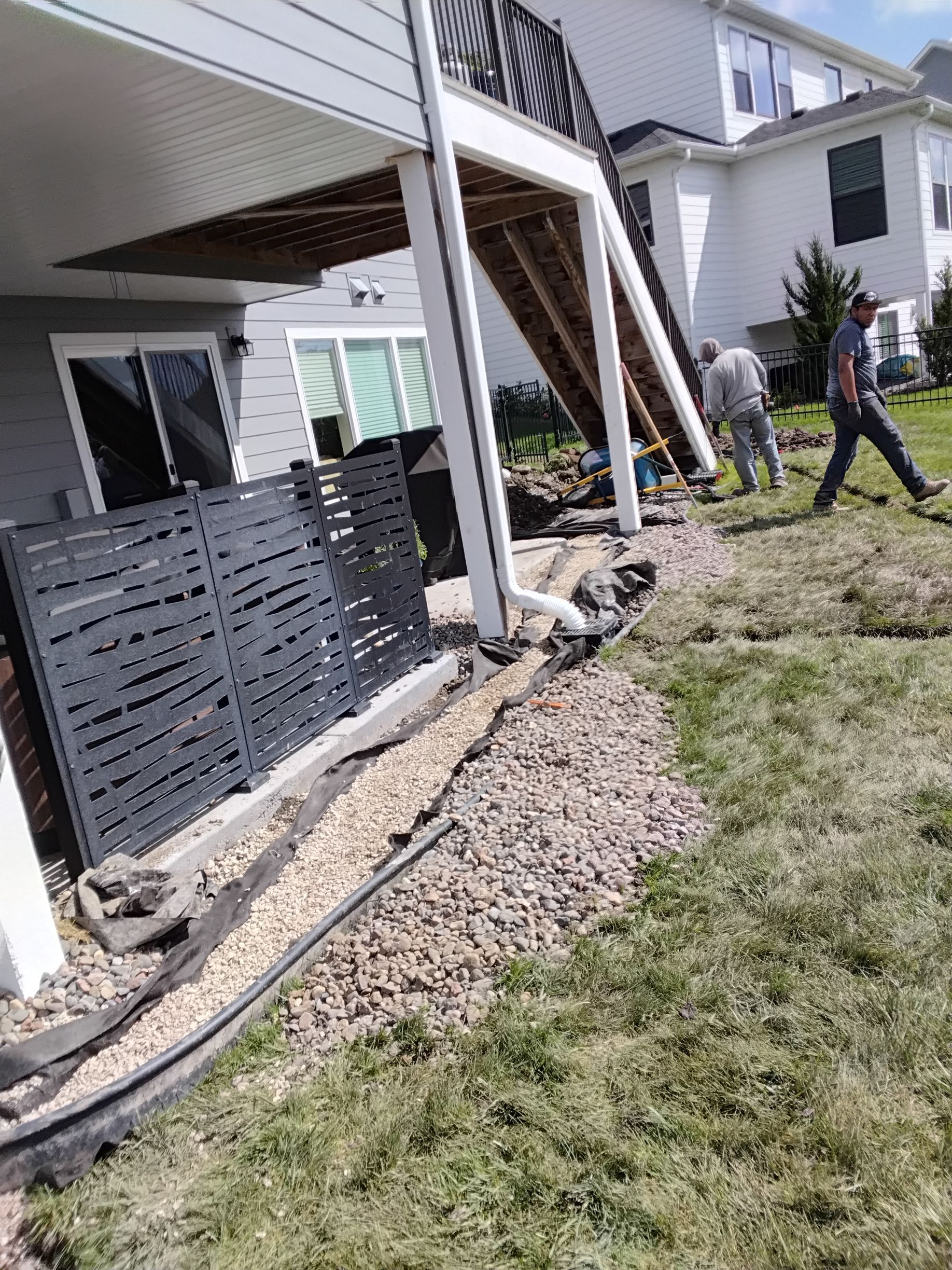
How French Drains Around Your Patio and Deck Footings Prevent Frost Heave Damage in Plymouth MN Clay
Protect your Plymouth patio and deck from frost heave damage and shifting by installing French drains that keep clay soil dry around hardscape and footings.
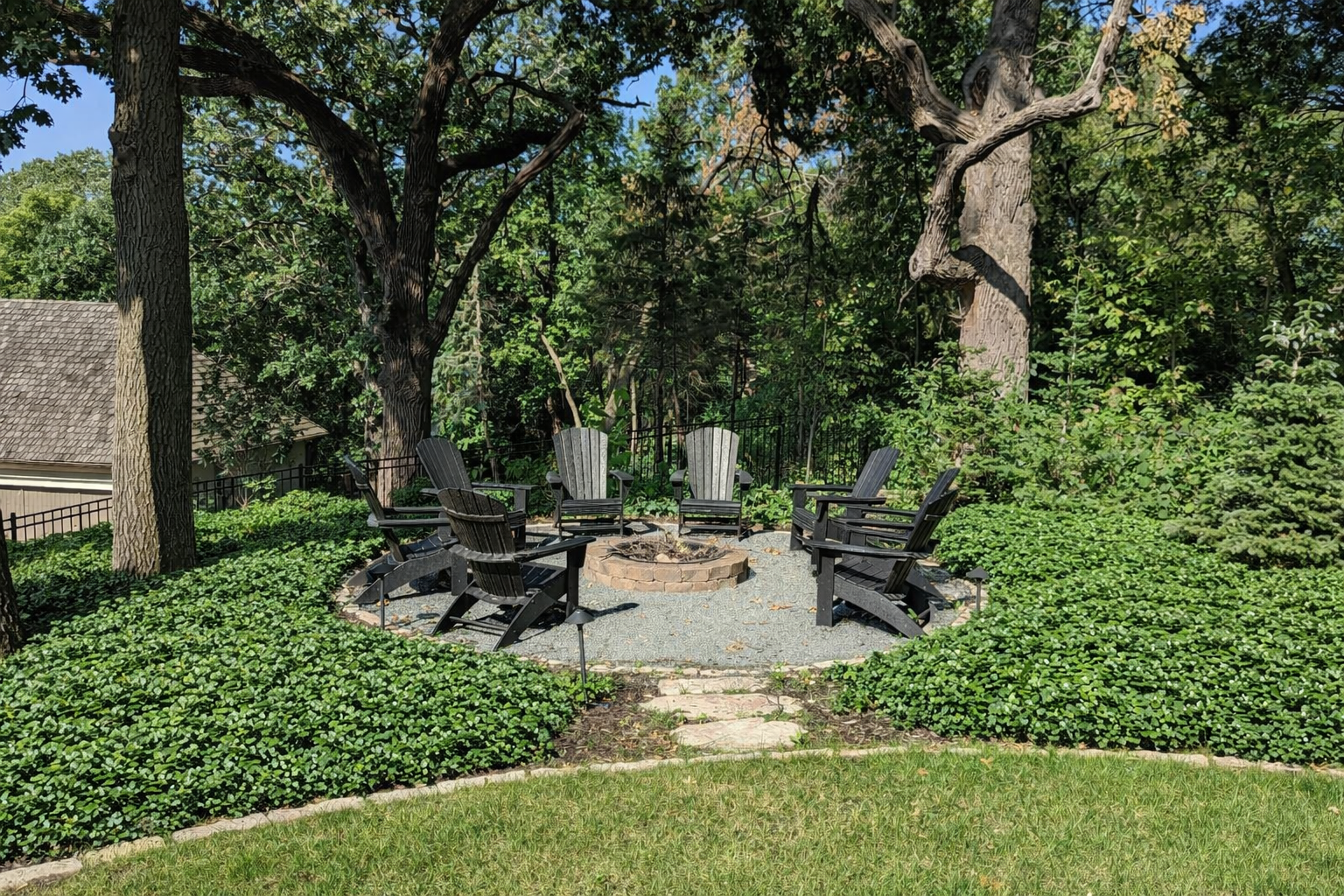
One Edina family had a 25-foot slope and nowhere for their kids to play. See how we turned it into a lawn, sport court, and fire pit.