7 Tips for a Welcoming Curb Appeal Design

 
Whether you’re looking to sell your home or simply create a welcoming atmosphere for visitors, curb appeal is one of the most important aspects of landscape design you can focus on. These tips will help improve your front yard landscaping and draw friends and family to your front door.  

1) Walkway

Install a brick or paver walkway to your front door. An attractive walkway goes a long way toward making your home seem inviting. After all, it literally leads to your front door! Cement is a tried-and-true option, but generally isn’t as pretty. Bricks and pavers are available in many colors, and individual pieces are easy to replace if they should become cracked. They can also be arranged in a variety of designs, which will catch your guests’ eyes. This easy customization means you can add your personal flair while still complementing your home.

Depending on the design of your yard and garden beds, try a curving walkway rather than a straight one. It feels a little more relaxed, and lets visitors feel like they’re meandering through the flowers and shrubs to your front door. If you have a more formal home and yard design, a straight walkway is perfect, especially as formal designs put more emphasis on symmetry.

2) Focal point

Create a focal point in your front yard. This can be just about anything—your front door, a bench set in a side garden, or water feature . Make this point a destination, a place you want people to be drawn to. If your focal point is your front door, make it unique by painting it a bright color, adding decorative trim around it, or framing it with flower pots on either side. If you choose a garden as your focal point, highlight what makes it unique. Do you have an interesting bit of statuary, or perhaps a fountain? Maybe the garden surrounds the spot a prized tree grows. Wherever it is you want to showcase, make it a welcoming feature your visitors will love.

3) Outdoor lighting

At night, outdoor lighting can be used to highlight your chosen focal point, line a walkway, or showcase your home—especially if it has unique architectural elements you’d like to show off. Outdoor lighting also creates a warm glow that draws people in and makes your home appear warm and inviting.

In some cases, the lighting can also be a feature all on its own. Light fixtures come in all sorts of shapes to fit your home, from lanterns to lampposts, from sconces to small solar lights. With such variety, you’re sure to find something that fits in with your home’s style and shows it to its best advantage.

4) Fence

Border your front yard with a lovely wooden fence . A classic picket fence adds to your curb appeal by adding a touch of hominess to your yard. Picket fences have the added benefit of feeling light and airy, and they won’t dominate your yard or block it from view.

For added appeal, encourage perennial vines to grow on the fence. Try flowering varieties such as clematis, wisteria, climbing hydrangea, or morning glory (which is an annual, but one of my favorites). Other popular options include Boston ivy, English ivy, Virginia creeper, or wild grapes. As with any planting, be sure to research the options before introducing them to your yard. For example, if you’re in a wooded area, avoid wild grapevines, as they spread very quickly.

5) Maintenance

A well cared for yard is a welcoming yard. Of course, you’ll want to keep your lawn looking nice with regular mowing and fertilizer treatments as needed. But also think about your garden beds. Make sure they’re well tended and weeded, that the edging isn’t grown over with grass, and that you’re replacing the mulch every year or two. Mulch isn’t always necessary, but it does look nice. As an added benefit, helps keep moisture in plant beds and cuts down on weeds, meaning less maintenance for you throughout the season.

We tend to avoid yards with unkempt lawns and weedy flower beds—they feel chaotic, and sometimes we feel like no one actually lives there—so being sure everything is neat and tidy will help create a calm, welcoming atmosphere.

6) Use color

Don’t be afraid to use color in your front yard plantings! Especially when it comes to curb appeal, though, you’ll want to keep in mind what sort of color scheme you want to pursue. While you’ll want to complement the color of your home, there are endless ways to do it.

While we tend to encourage perennial plantings in your front yard over annuals, as they don’t need to be swapped out every season, annuals do grant added flexibility. For example, we recommend planting bright flowers in the spring and summer. When fall rolls around, plant flowers in more autumnal colors, in shades of reds, oranges, and yellows. In winter, you’ll want to rely upon evergreen plantings for color. Not only will you match the feelings of the seasons, but you’ll be keeping things fresh throughout the year.

7) Container garden

If you have limited space, you don’t have to give up on your curb appeal dreams. Container gardens are a wonderful alternative to traditional beds. As added bonuses, they’re easier to move, easier to replant, and are much lower maintenance. They can also be used throughout the year, if you switch out flowers for pine boughs or bright red twigs in late fall.

Consider grouping pots on the steps near the front door, or use them on and around a garden bench. You can also incorporate them into existing gardens, setting them among the existing plants or burying them partway into the ground on their side for a “spilled flower” sort of look. Container gardens are a fun way to show your personal style, with endless styles and colors of pots to choose from.

Do you want to improve your home’s curb appeal? Need some fresh new ideas? Our experts are happy to help. Give us a call at 763-568-7251 or use our quote system to contact us today.

Ready to Start on Your Next Project?

Call us at (763) 568-7251 or visit our quote page.
By Daniel . July 9, 2026
The legendary architect Louis Sullivan coined a phrase that has driven architecture and design ever since: "form follows function." While aesthetics are critical to buildings and landscapes alike, that physical beauty must always remain secondary to the fundamentals of good design. In Shoreview, Minnesota, just outside St. Paul , we encountered a landscape where, unfortunately, function followed form. Here, the realities and principles of effective drainage were downstream of their original builder's aesthetic choices. That meant water from snowmelt and rainfall was streaming into parts of the lawn where it wasn't meant to be. The standing water that had been allowed to collect in the back and side yards was putting a considerable amount of the property out of play. In order to reclaim usable space and rethink the way the land handled water, this Shoreview homeowner entrusted KG Landscape with identifying key issues, presenting potential solutions, and doing the necessary work the client decided upon to restore their lawn.
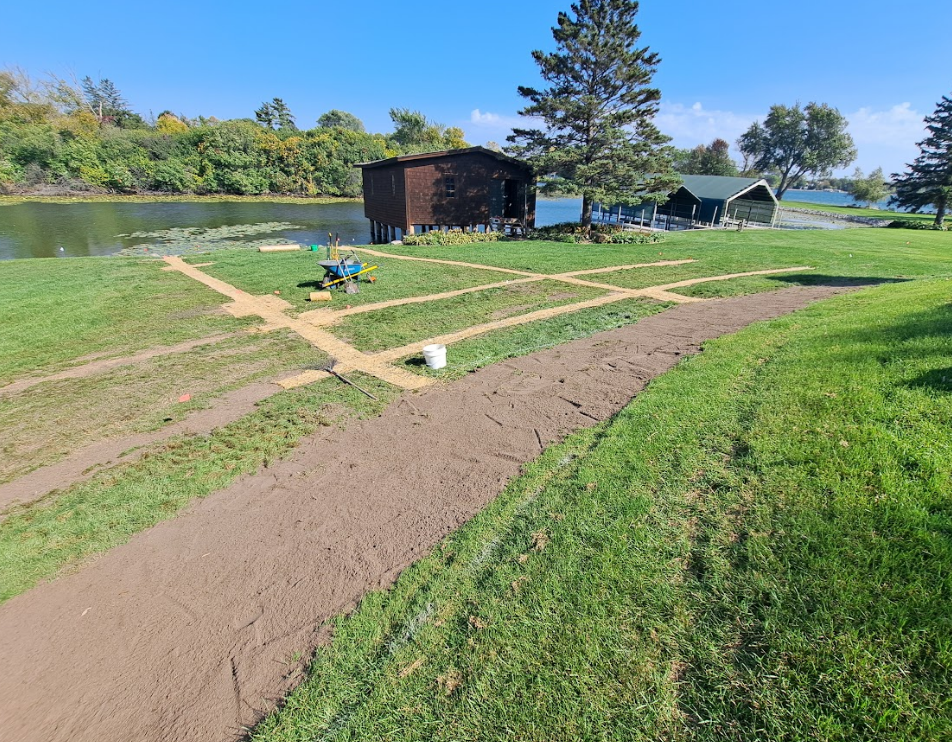
A landscape showing a lawn with freshly dug trenches and a curved dirt path leading toward two dark buildings by a lake.
By Kent Gliadon July 9, 2026
On the shores of Lake Minnetonka, perhaps the most famous of Minnesota's 10,000 lakes, an Orono, Minnesota homeowner was struggling with a back yard that was becoming more marsh than yard. The yard was a scenic one. The back porch opened up to the top of a small hill, which rolled down toward the lakefront and the boathouse. This flat space between the hill and the water would be ideal for backyard barbecues, some low-stakes games of bocce and badminton, or simply a spot to lay down a towel and get some summer reading done. Instead, this area was too waterlogged to enjoy. The runoff from the hilltop combined with unfavorable soil composition were limiting the use of the yard, closing off space while even diminishing the quality of the turf. How would this homeowner be able to reclaim this unusable land without disrupting the Lake Minnetonka shoreline that made the property so attractive? To find a solution, they turned to KG Landscape.
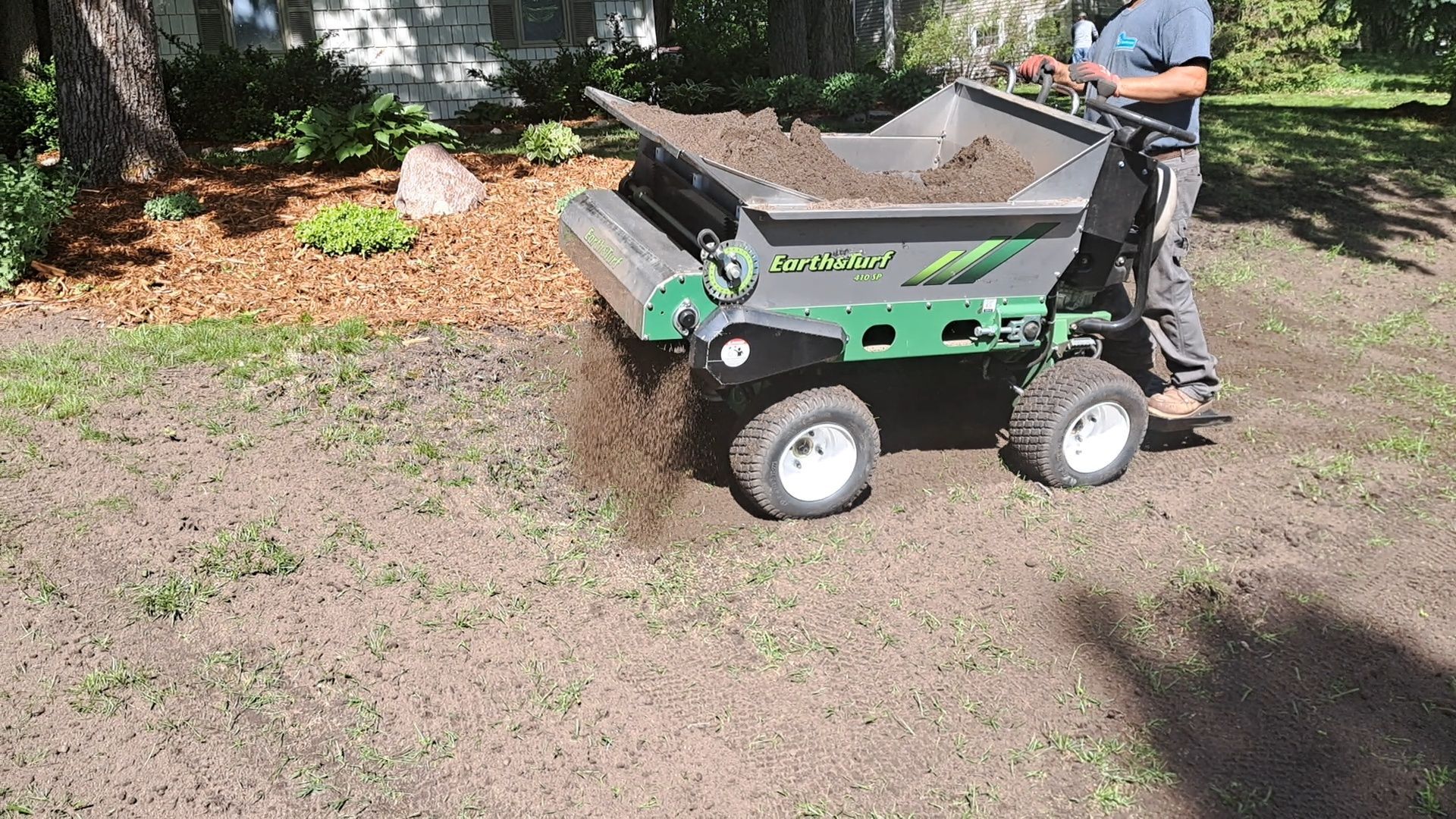
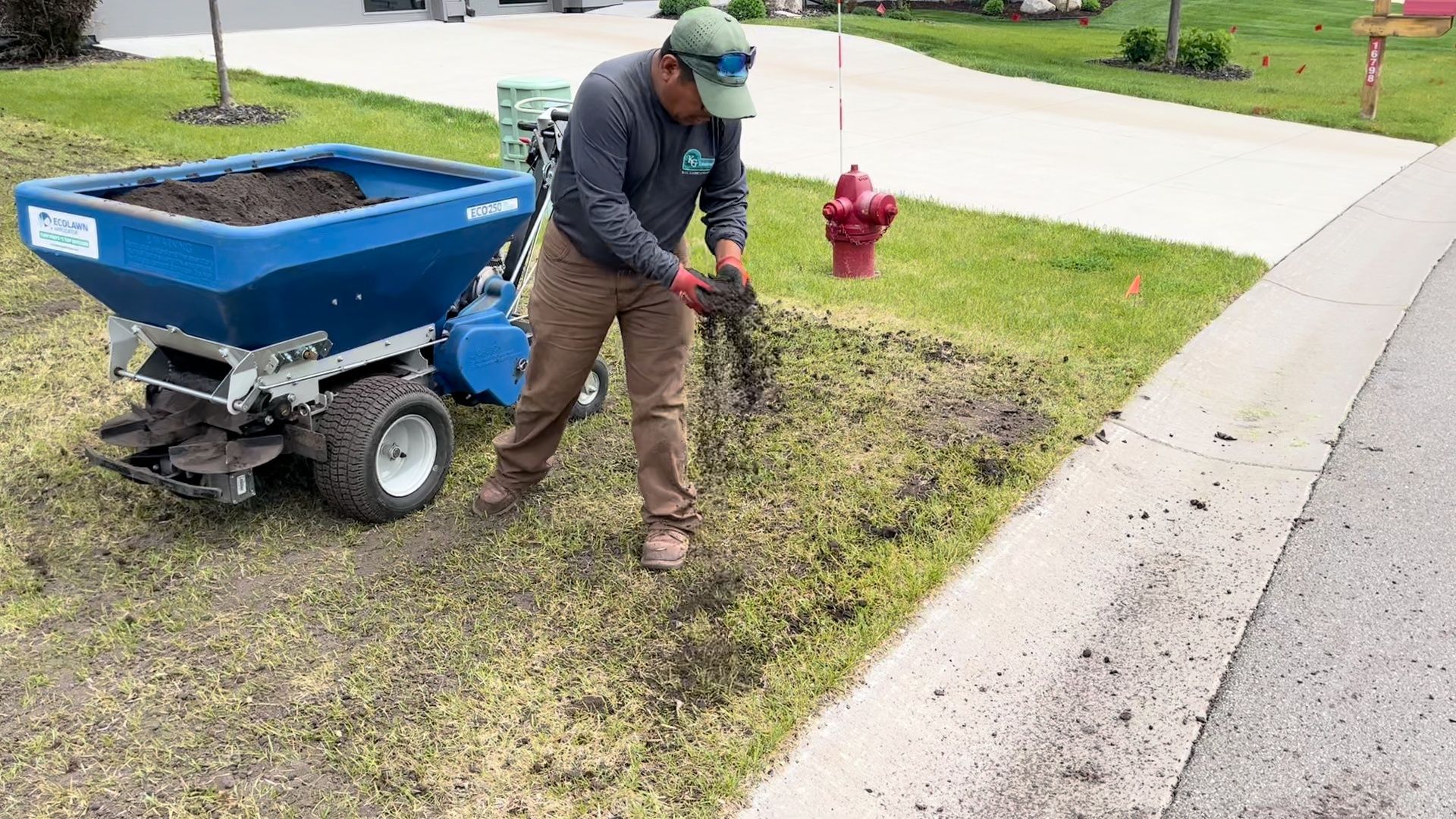
Power borrow dumping organic soil
By Kent Gliadon June 10, 2026
Can you use compost as lawn fertilizer in Minnesota? Learn how compost feeds turf, how to apply it, and where it fits. Get a free quote.
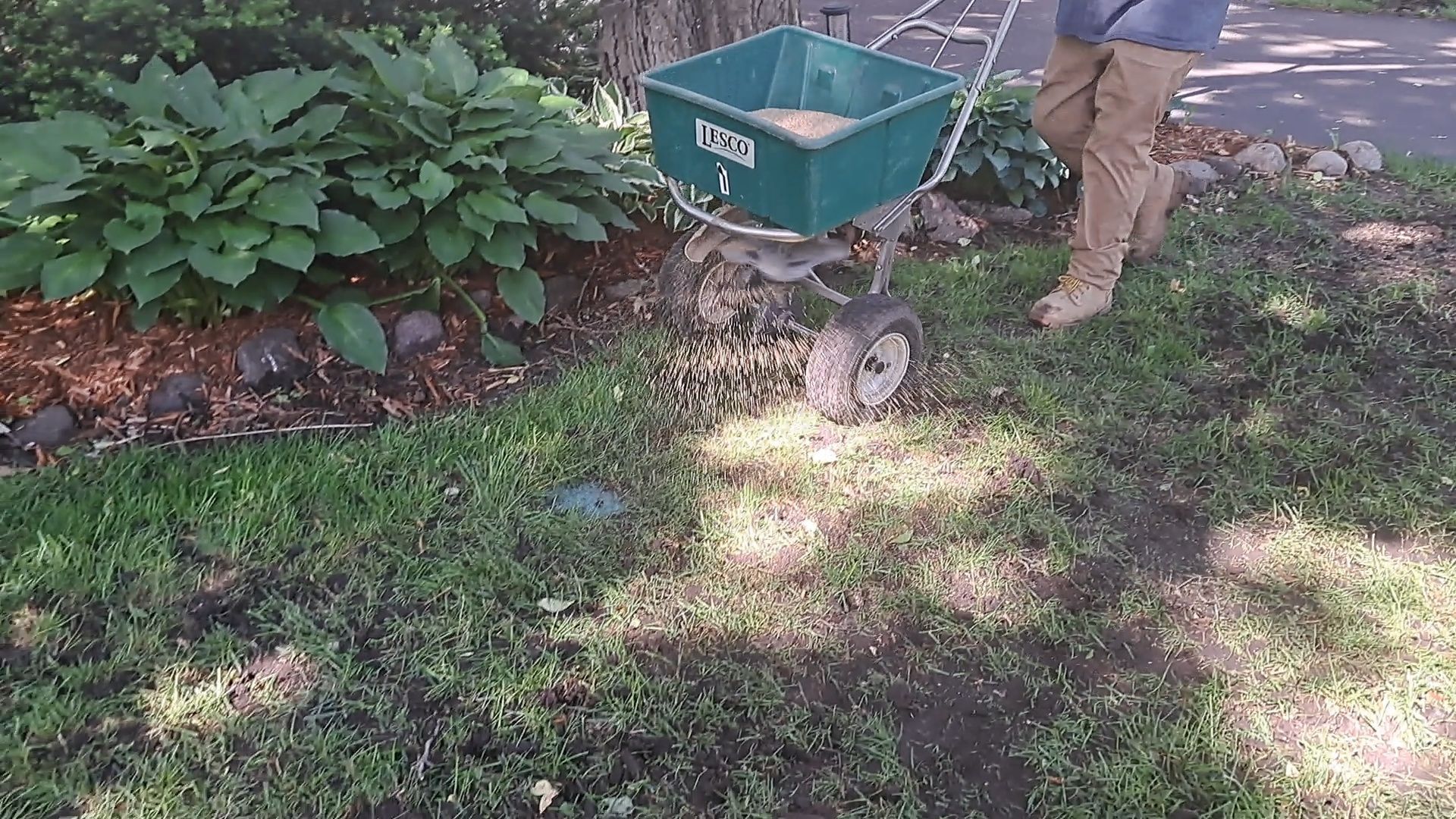
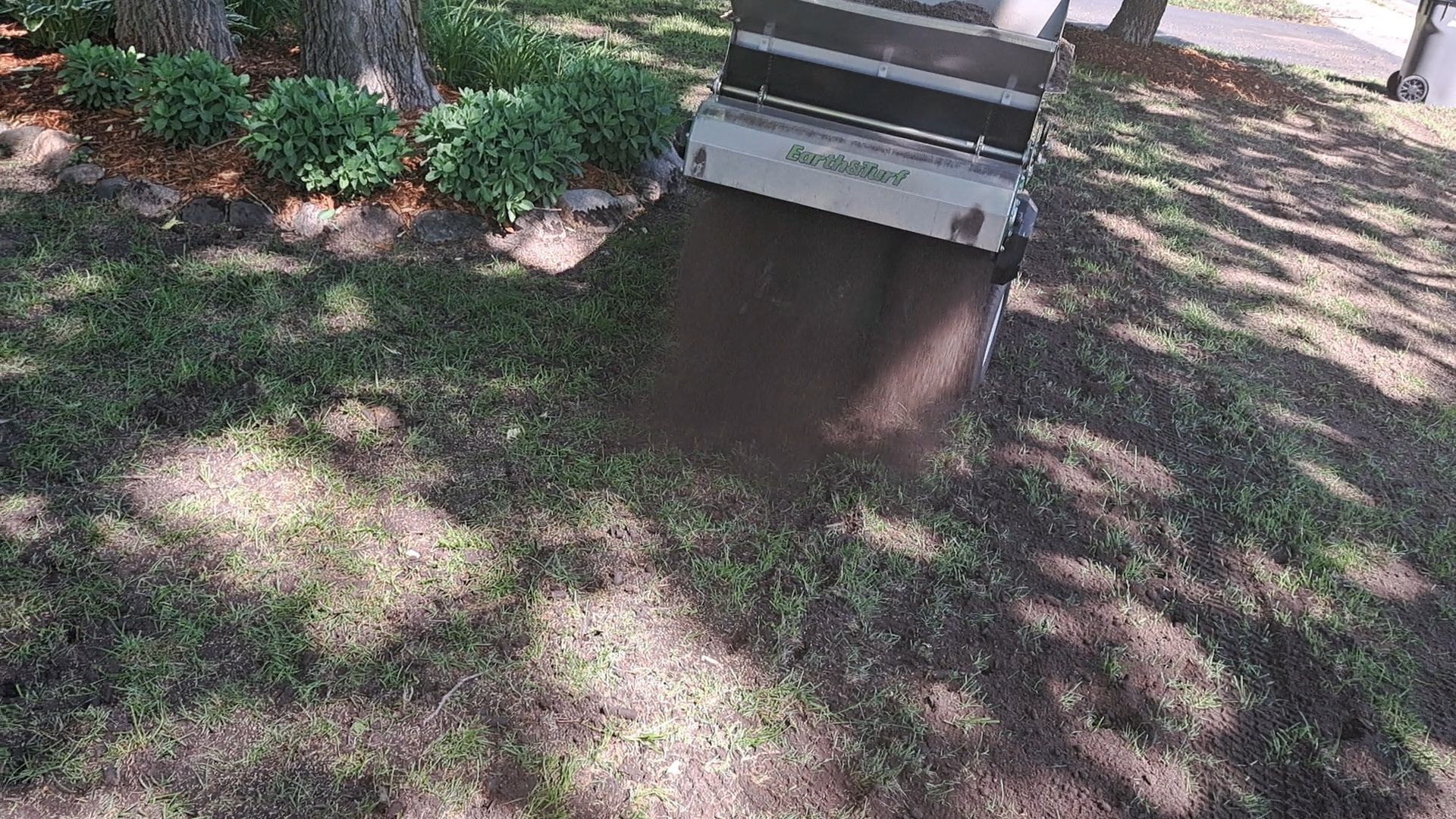
Overseeding organic soil on a lawn in Minnesota.
By Kent Gliadon June 9, 2026
Organic weed control for Minnesota lawns: what works, what doesn't, and how to manage weeds without harsh chemicals. Get a quote.
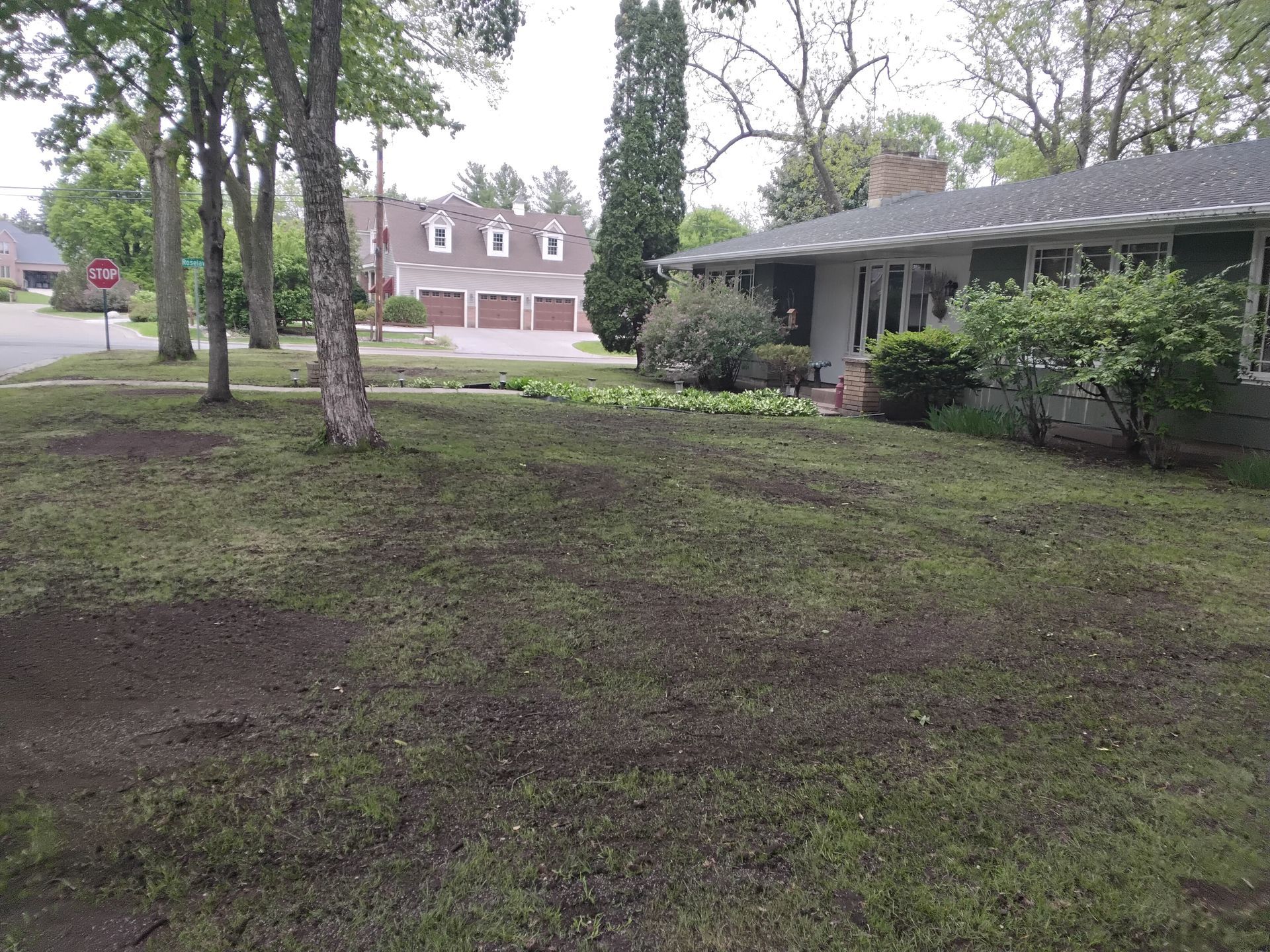
Lawn with fresh organic topdressing.
By Kent Gliadon June 7, 2026
Keep your lawn and your pets safe. Pet-safe lawn care tips for Minnesota yards, from products to timing. Get a free quote.
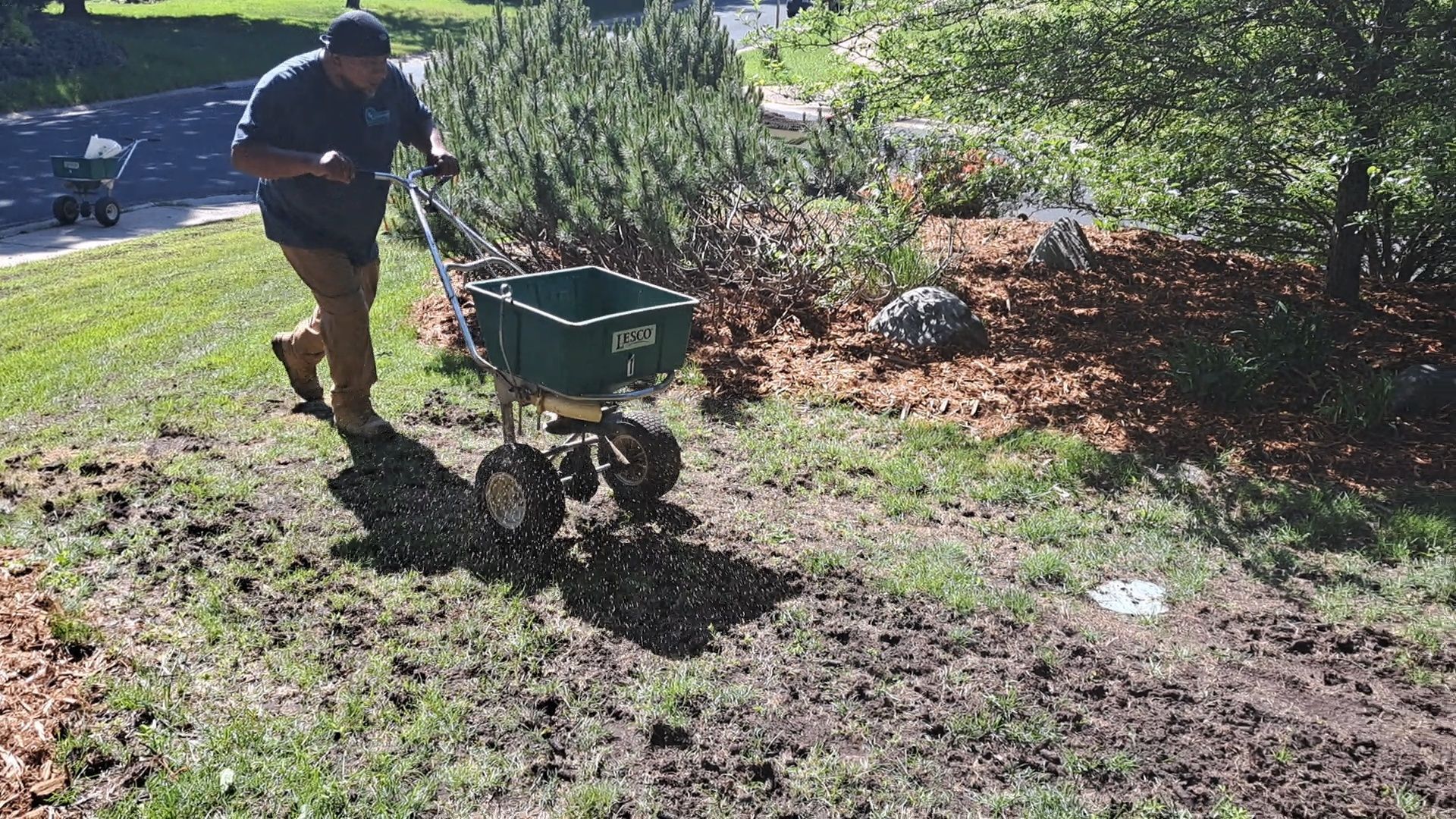
Organic Compost being distributed over lawn.
By Kent Gliadon June 6, 2026
Looking for the best organic lawn fertilizer in Minnesota? See top options, how they feed your turf, and what KG uses. Get a quote.
Spreading organic compost on Twin Cities lawn.
By Kent Gliadon June 3, 2026
Is compost a fertilizer? Learn what compost does for your Minnesota lawn, how it differs from fertilizer, and when to use it. Get a quote.
completed organic top soil on lawn
By Kent Gliadon June 1, 2026
Compost feeds the soil, fertilizer feeds the grass. Learn which your Minnesota lawn needs, when to use each, and how to apply both. Get a quote.
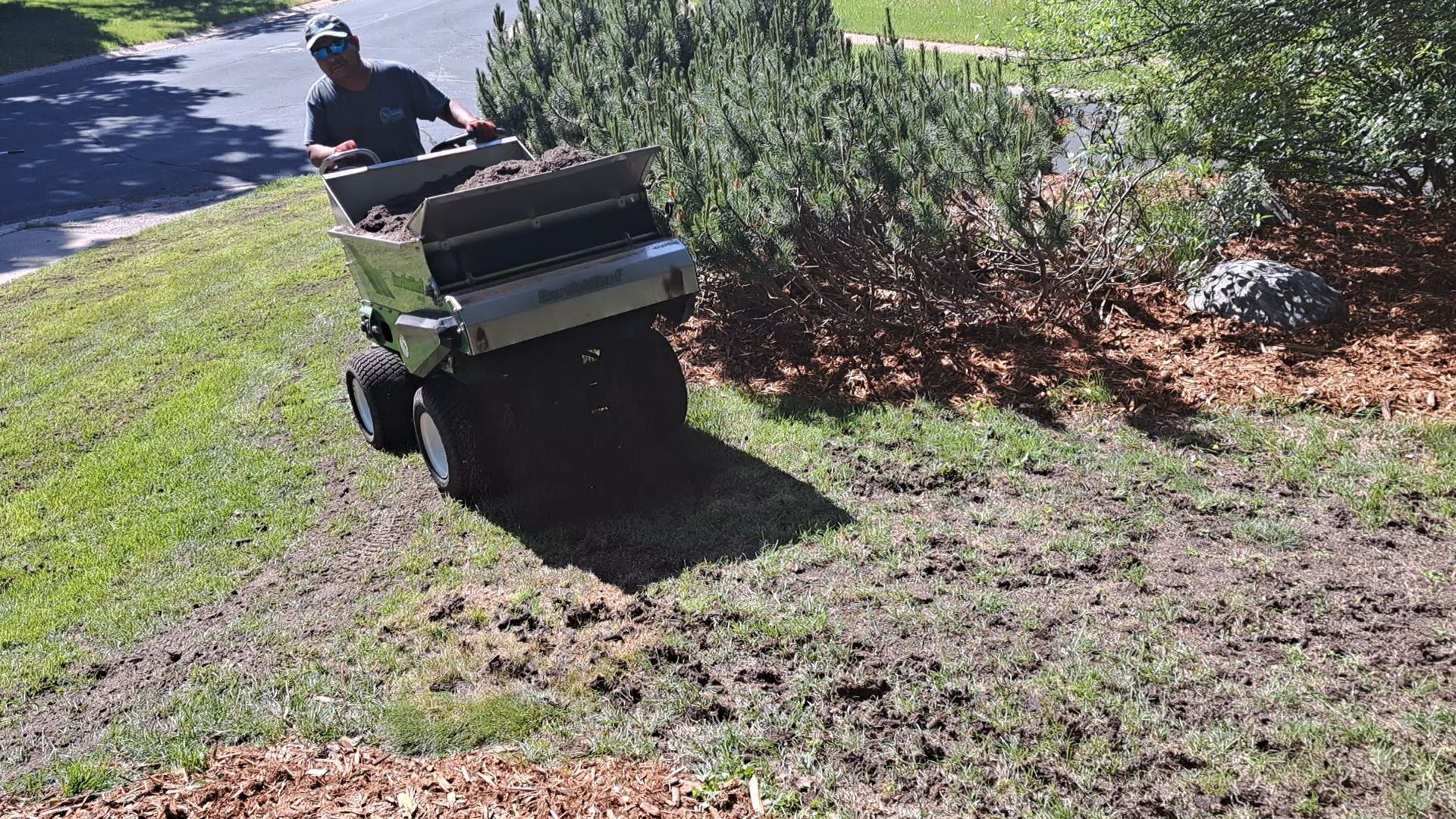
Cart tipping organic topsoil.
By Kent Gliadon May 30, 2026
Eco-friendly lawn care tips for Twin Cities yards: cut chemicals, save water, and build healthy soil naturally. Get a free quote.
Providing topdressing to lawn in Minnesota.
By Kent Gliadon May 27, 2026
Simple, proven lawn care tips for Minnesota yards: mowing, watering, feeding, and building healthy soil that lasts. Get a free quote.